2020 - 2022
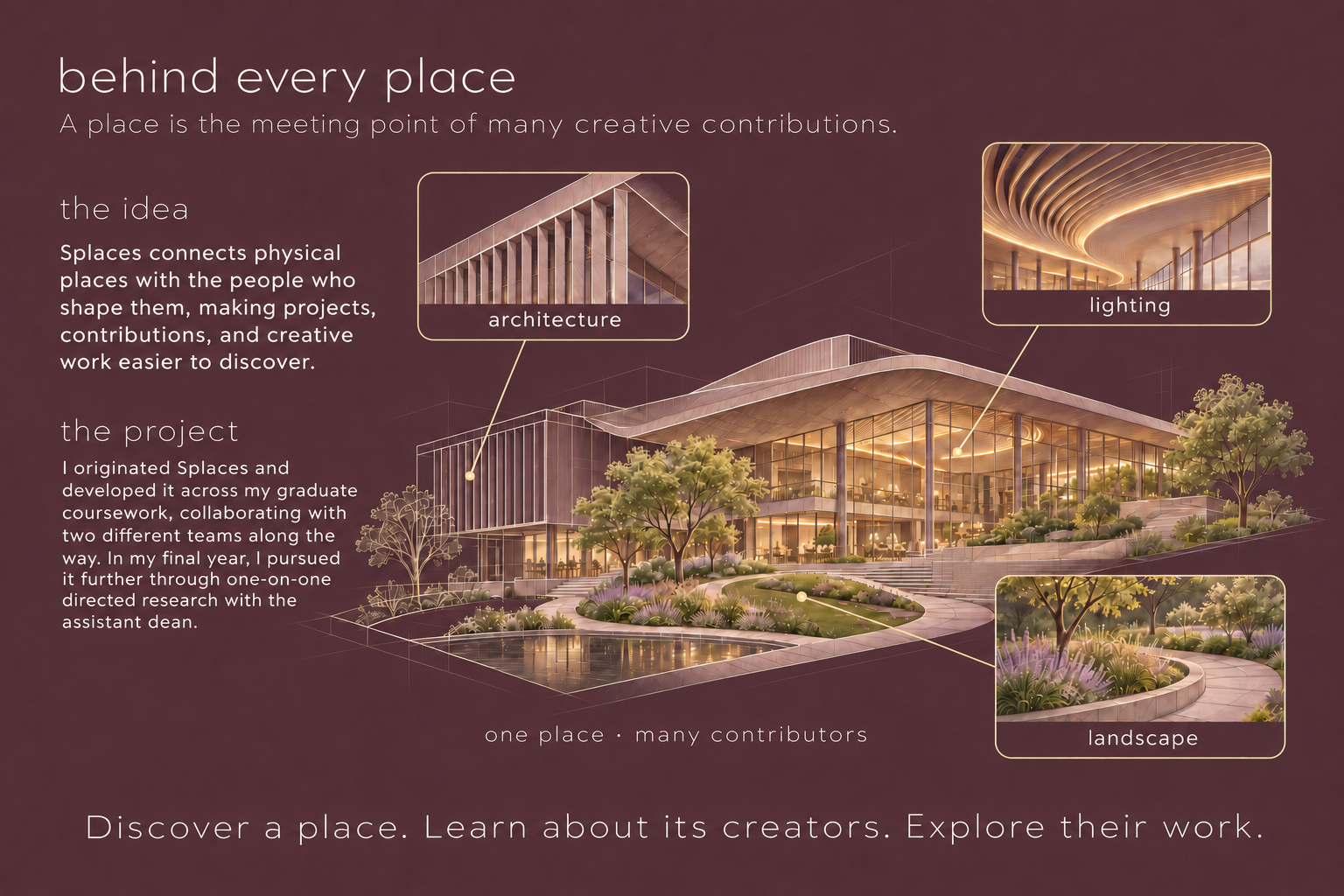
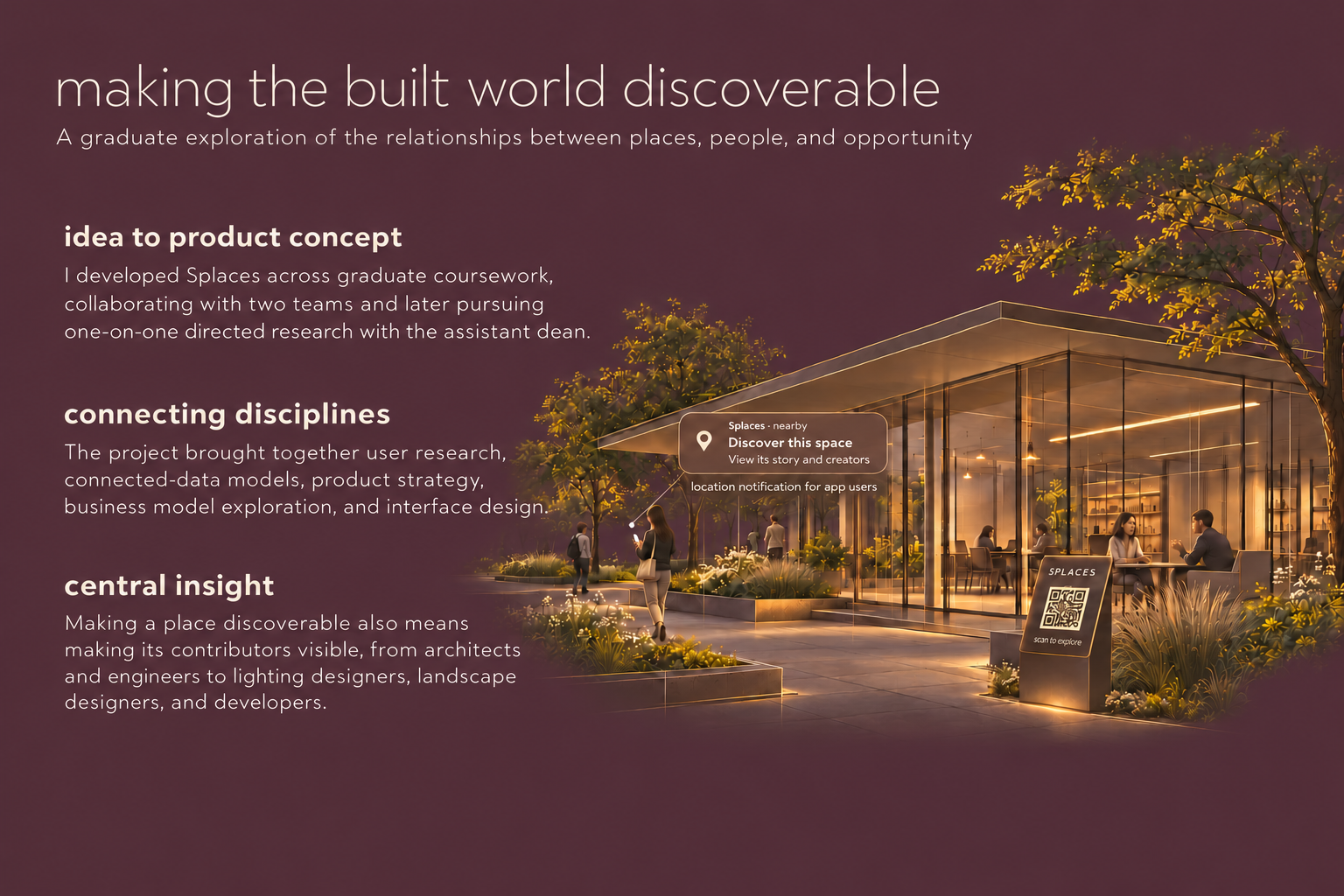
Led multiple teams around a vision for Splaces, an application connecting information about our built environment to the creators behind it. Brought into the program as a founding concept, it evolved through UX design coursework led by Professor Chris Swain and independent directed research with Professor Michael Crowley, Ph.D. Together, these inquiries explored how information, visibility, and relationships shape recognition and opportunities for professionals.
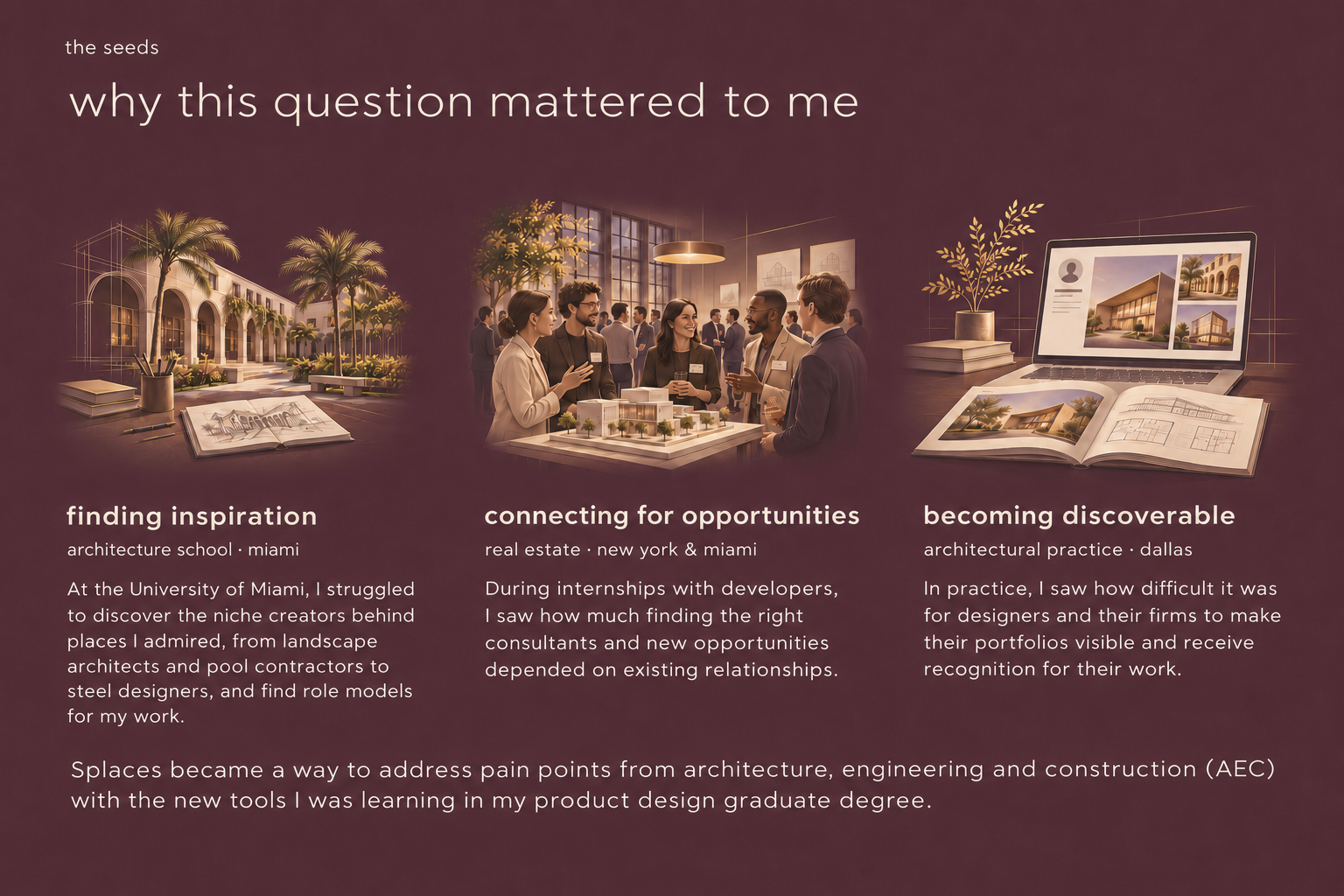
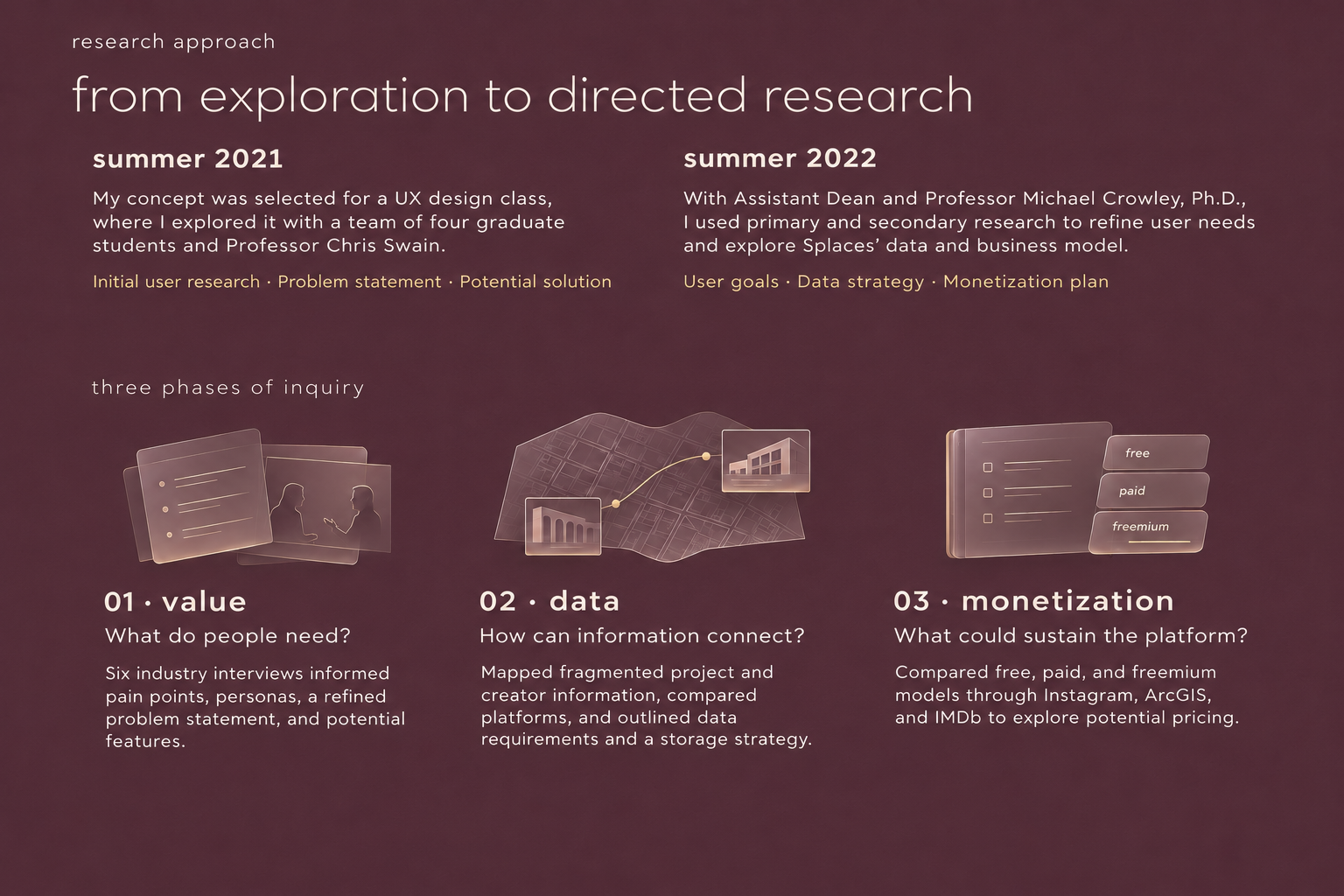
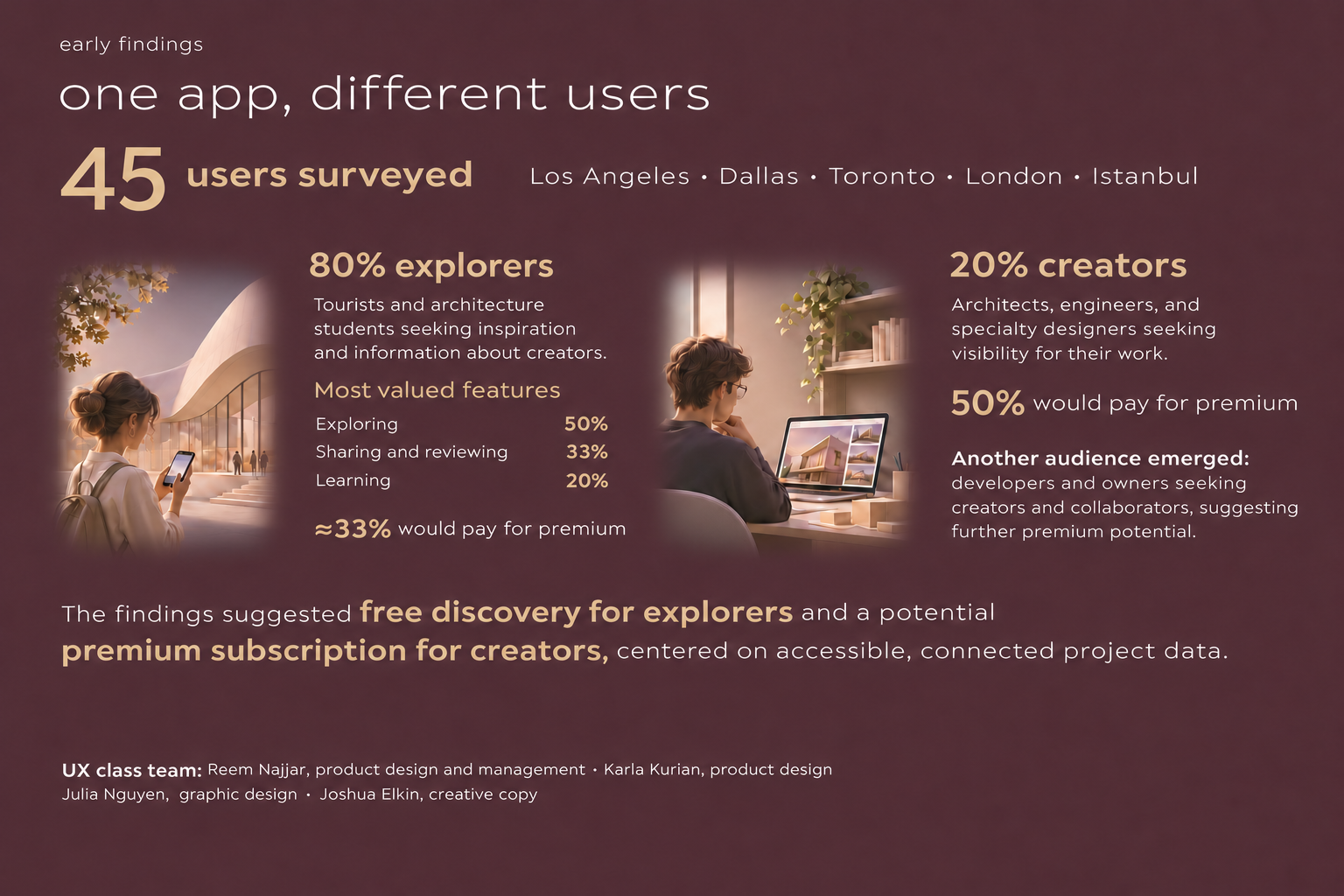
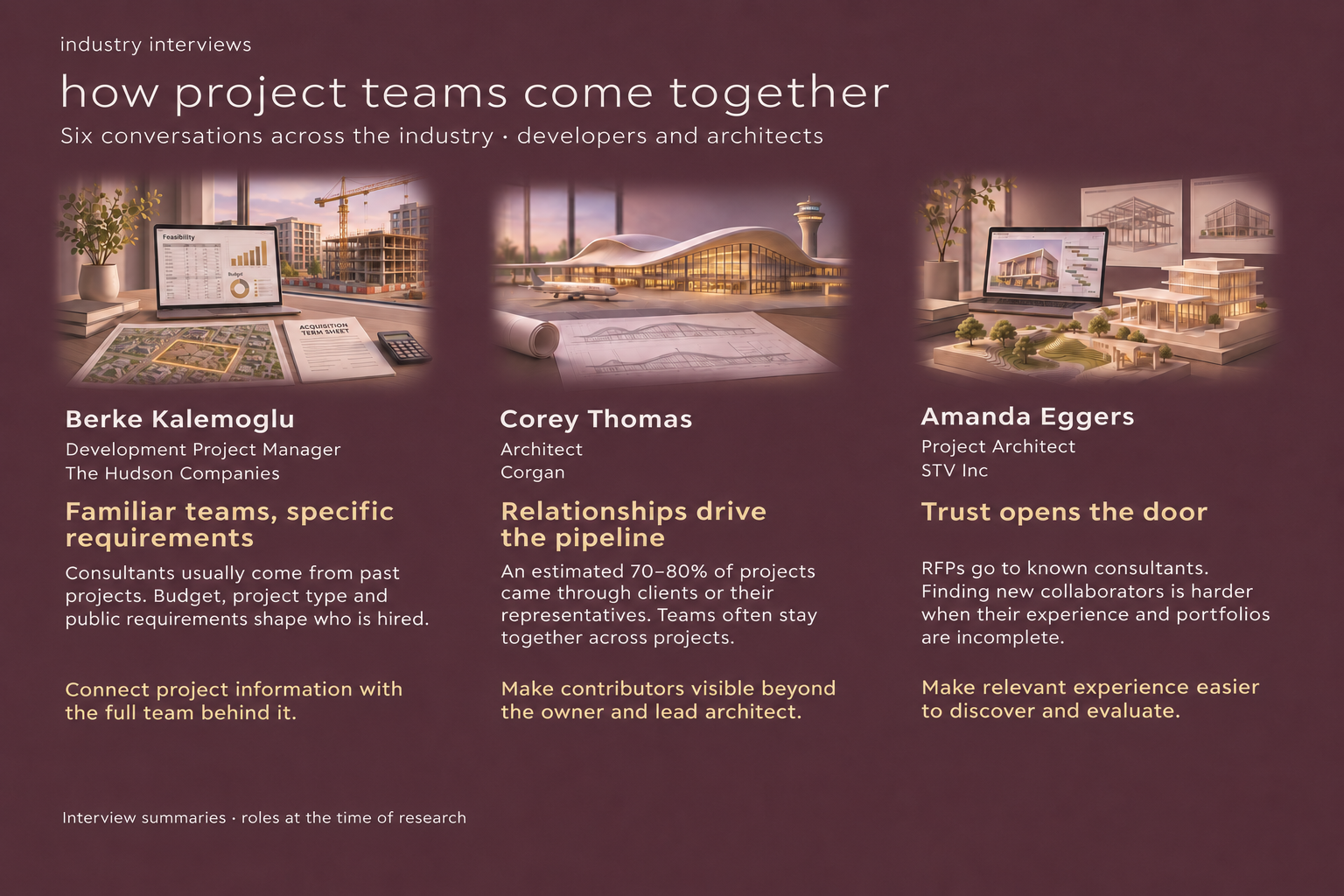
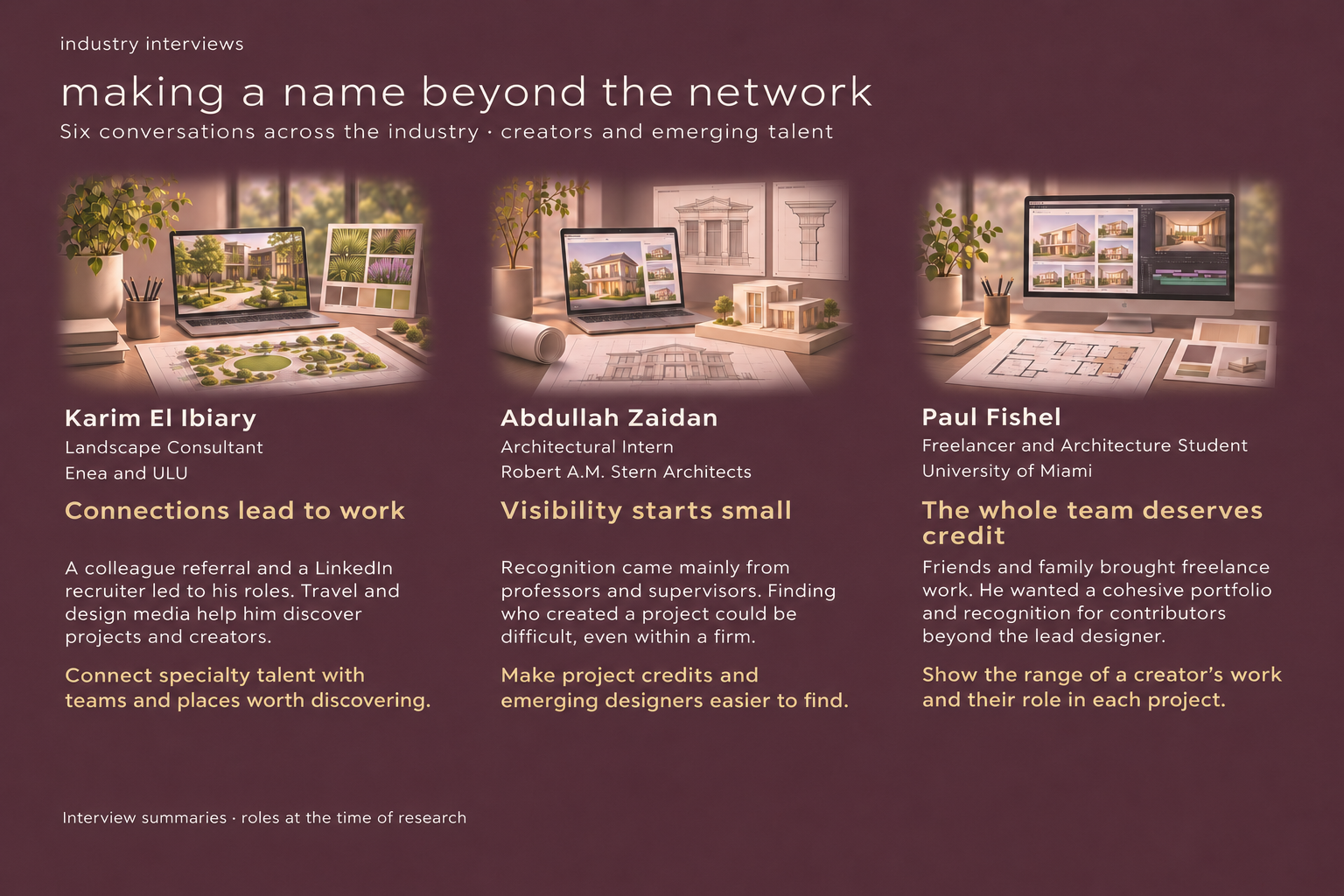
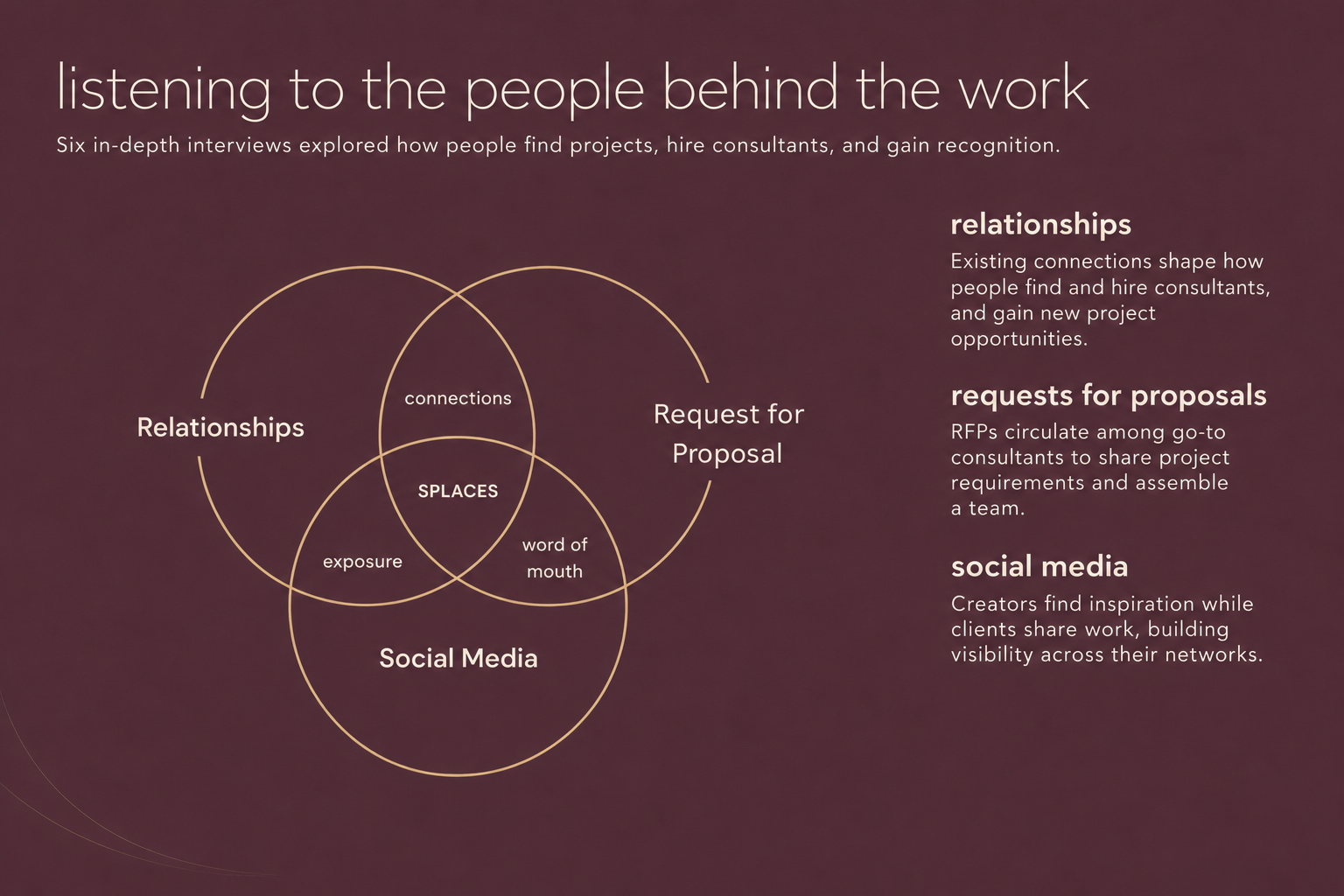
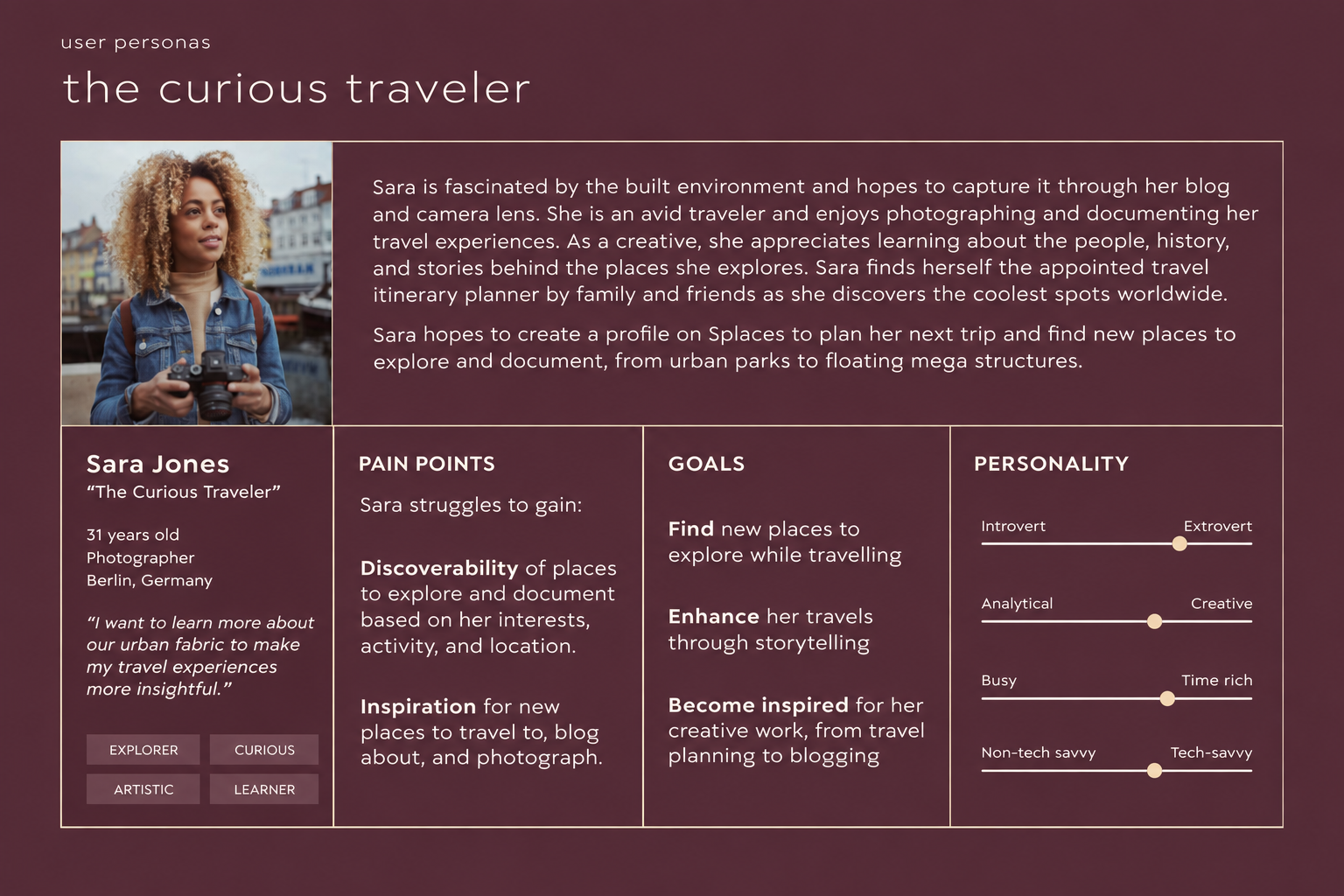
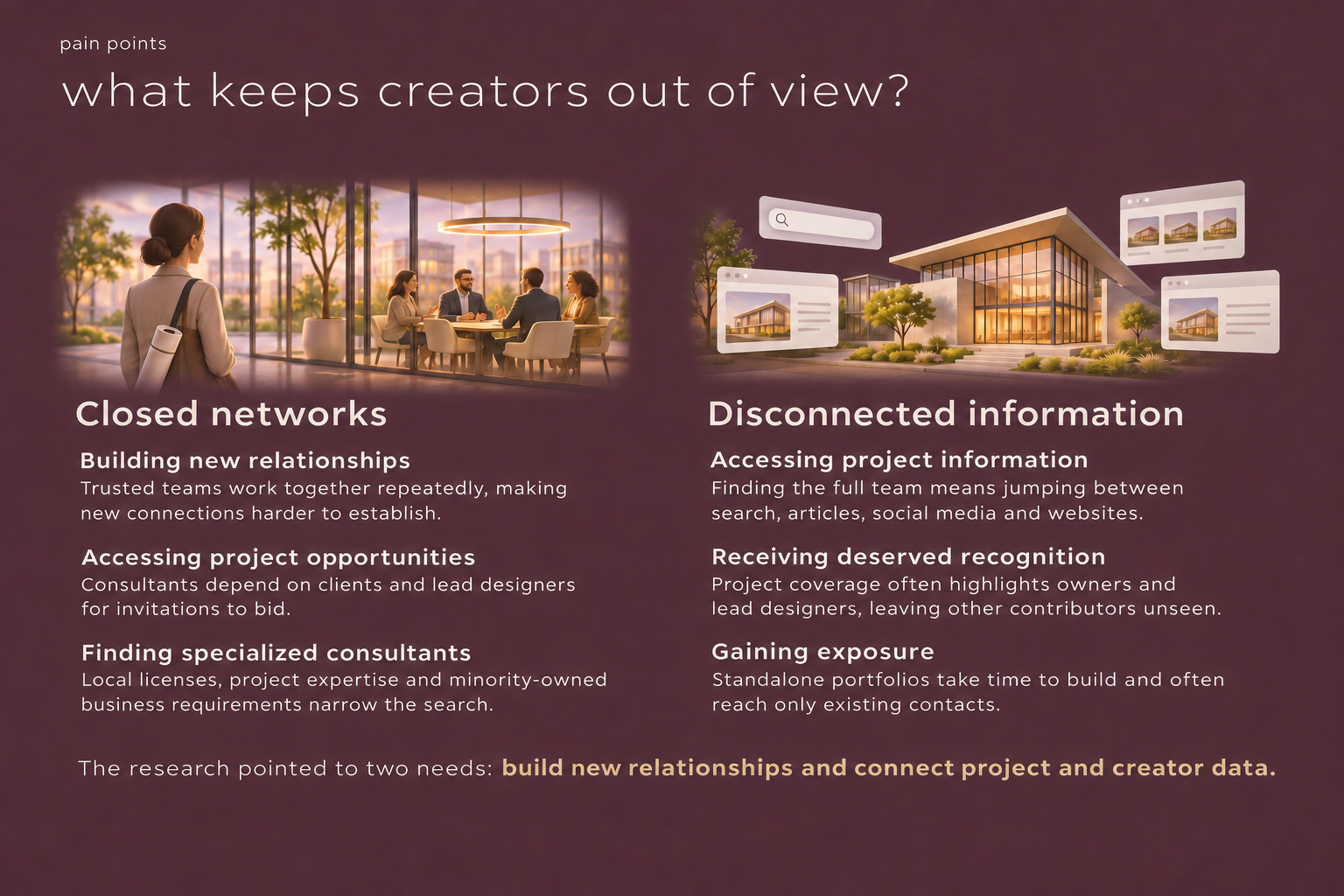
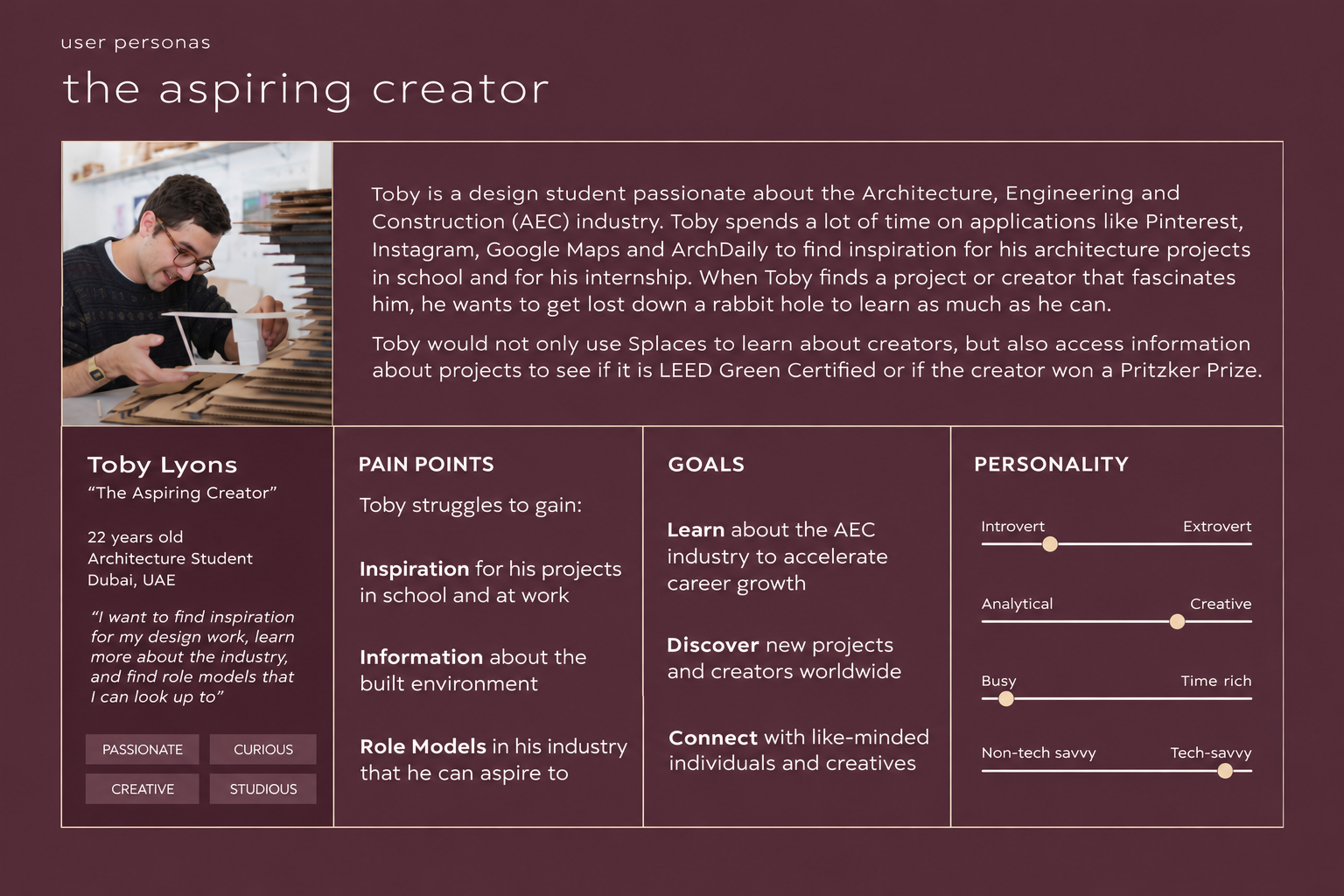
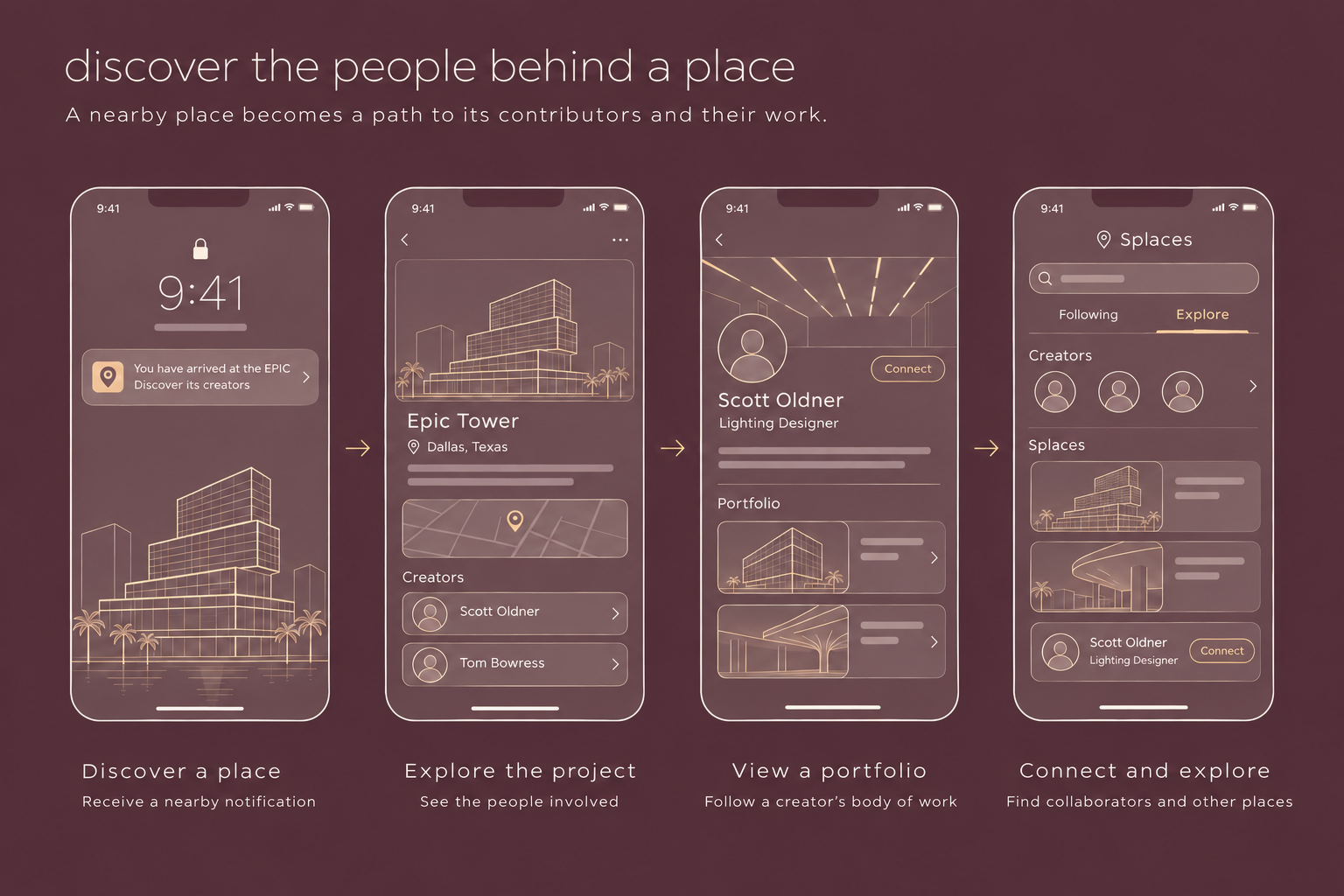
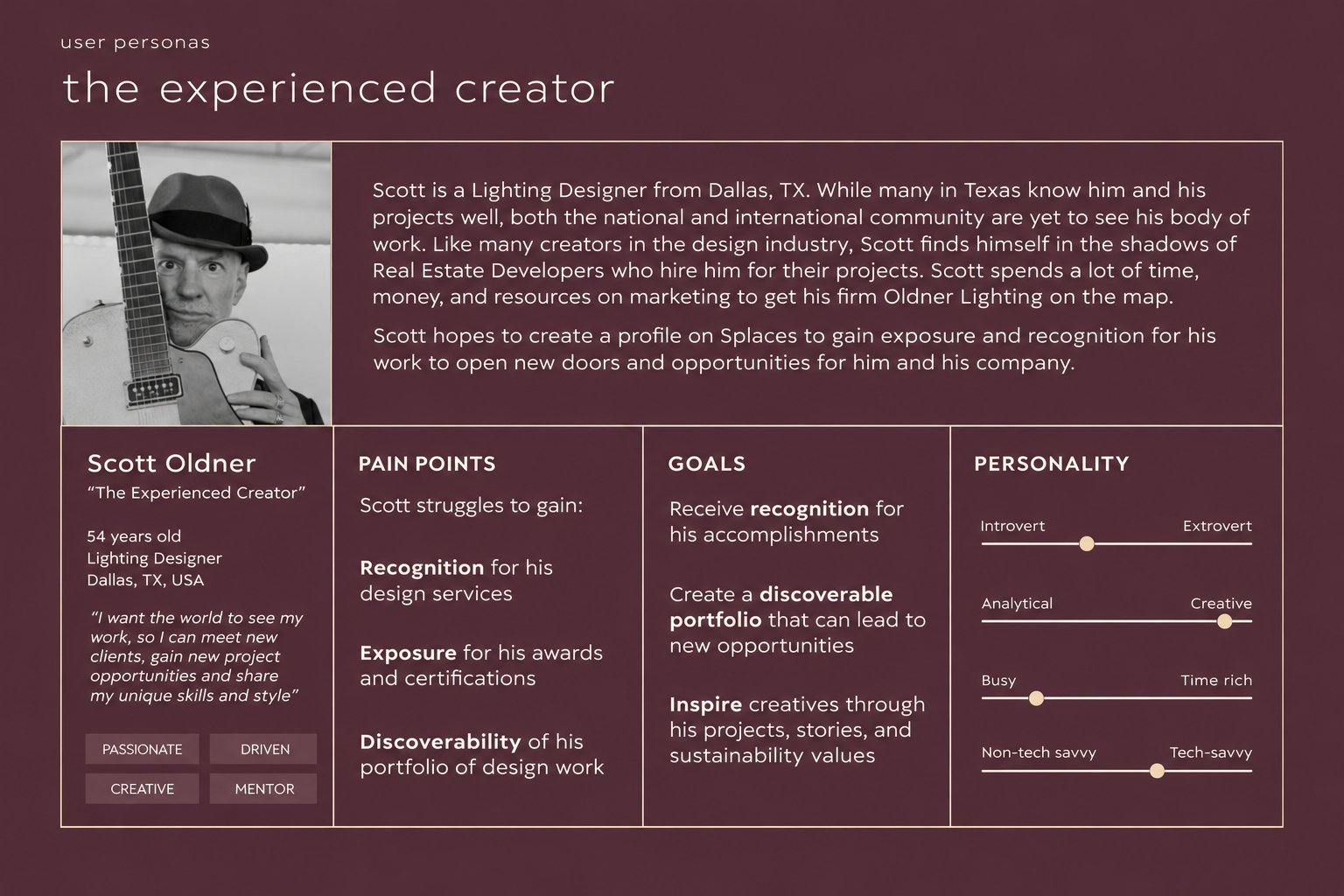
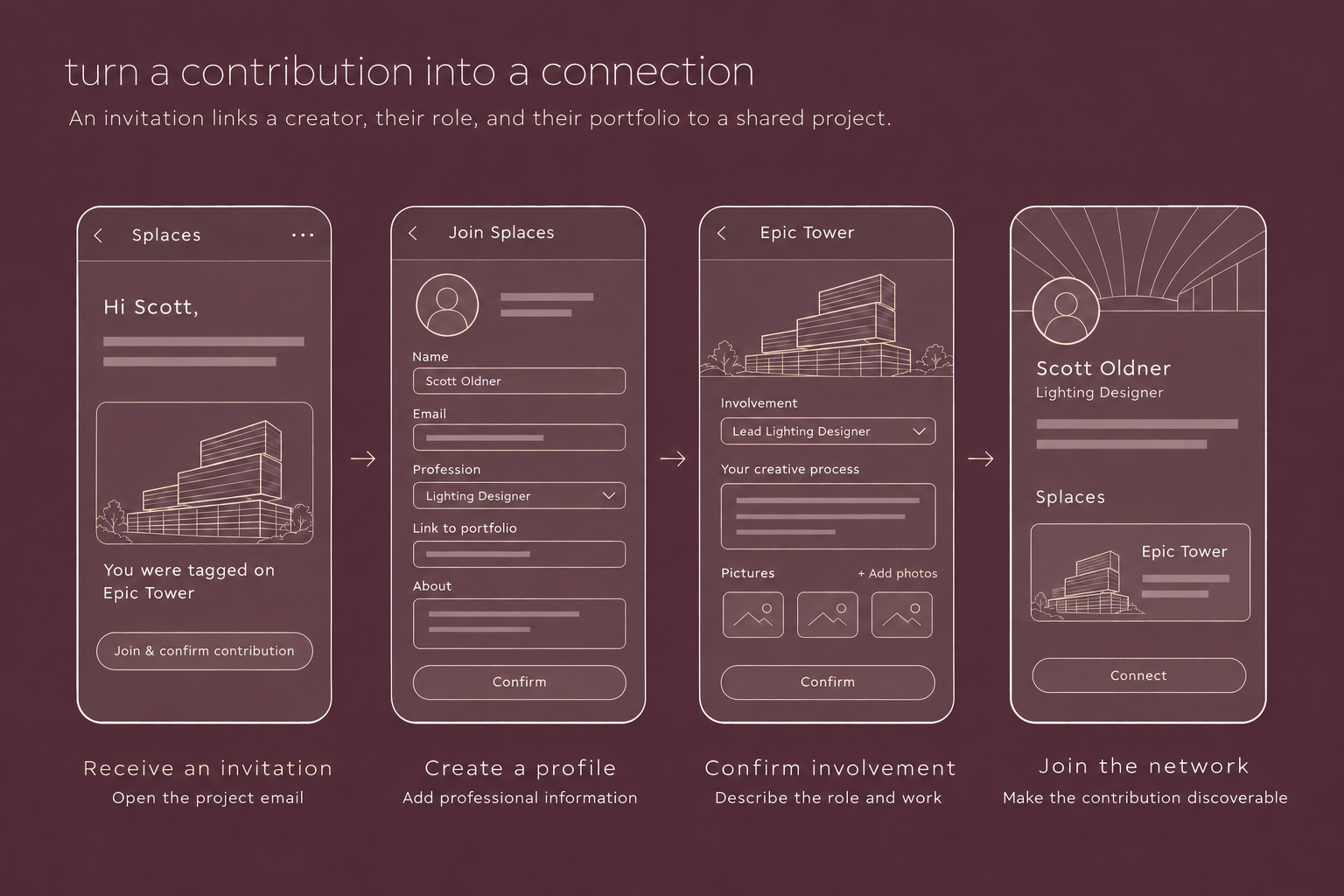
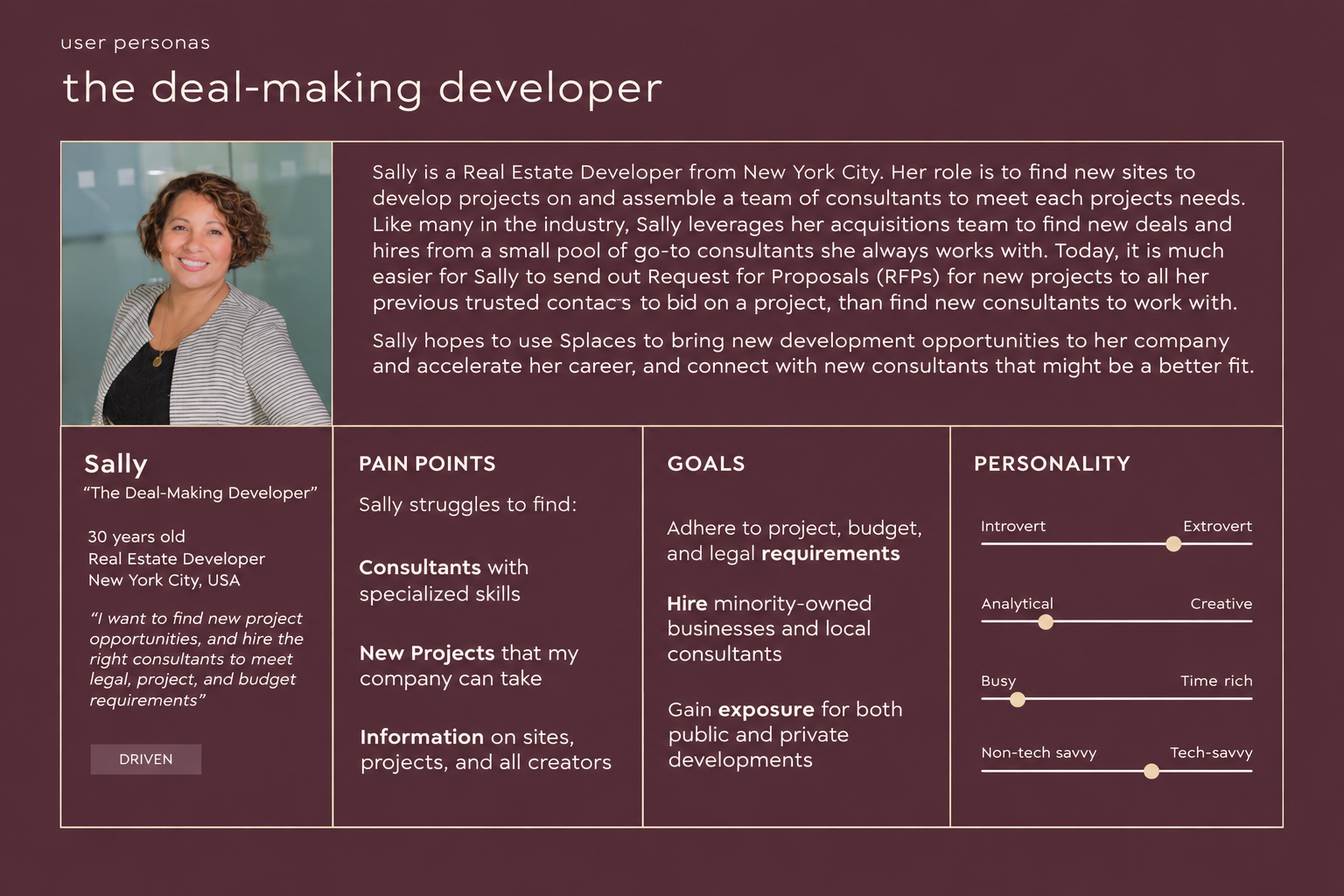
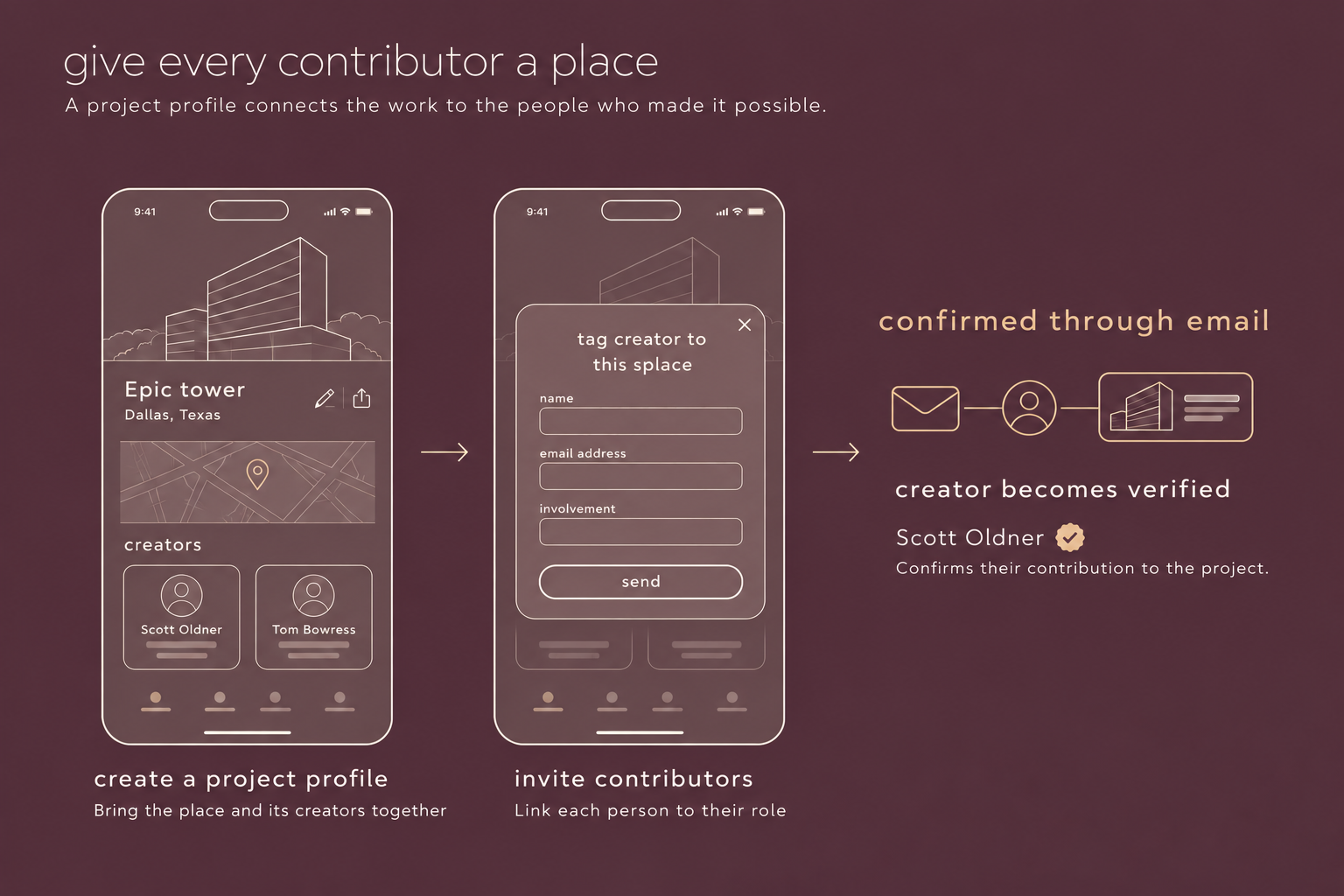
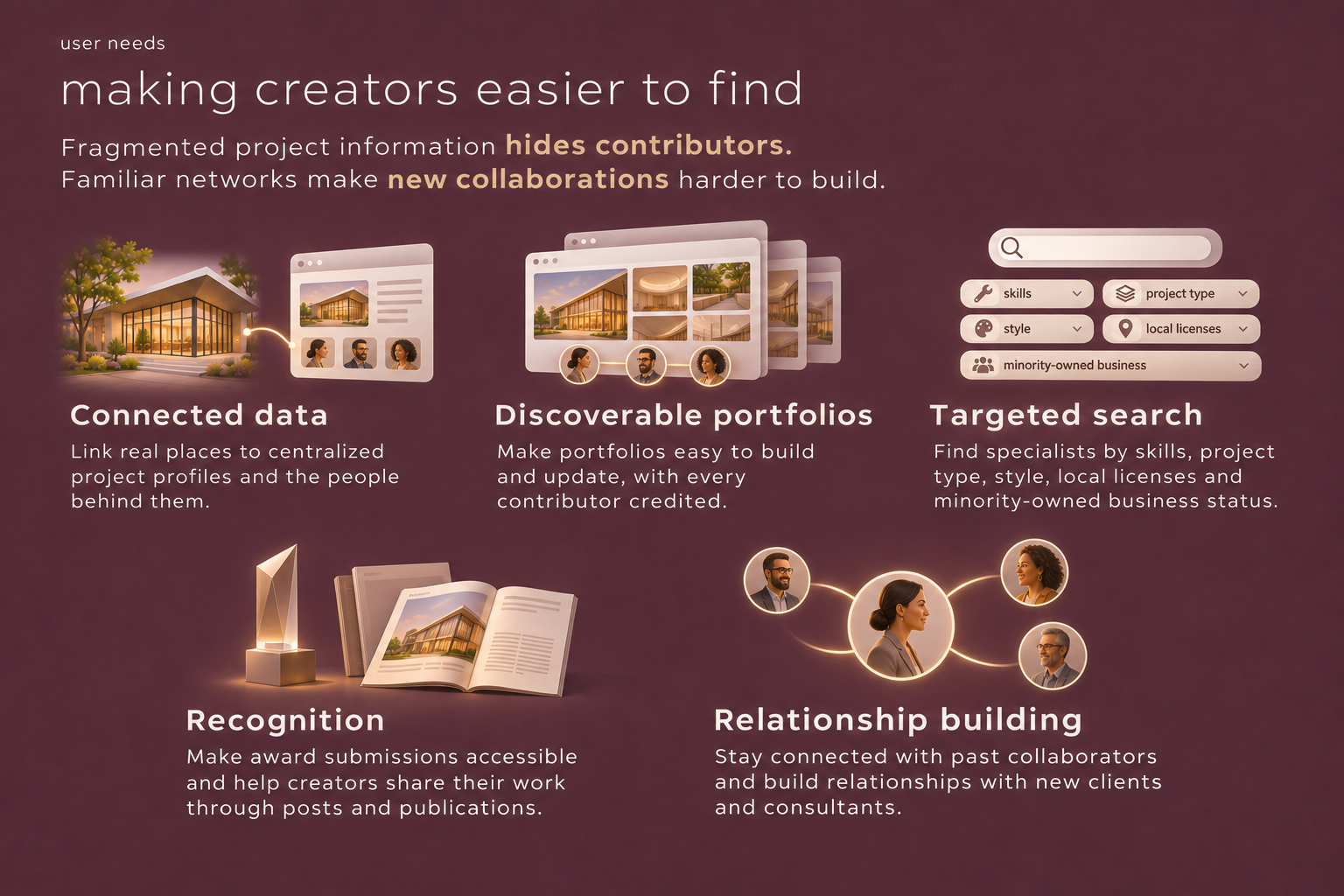
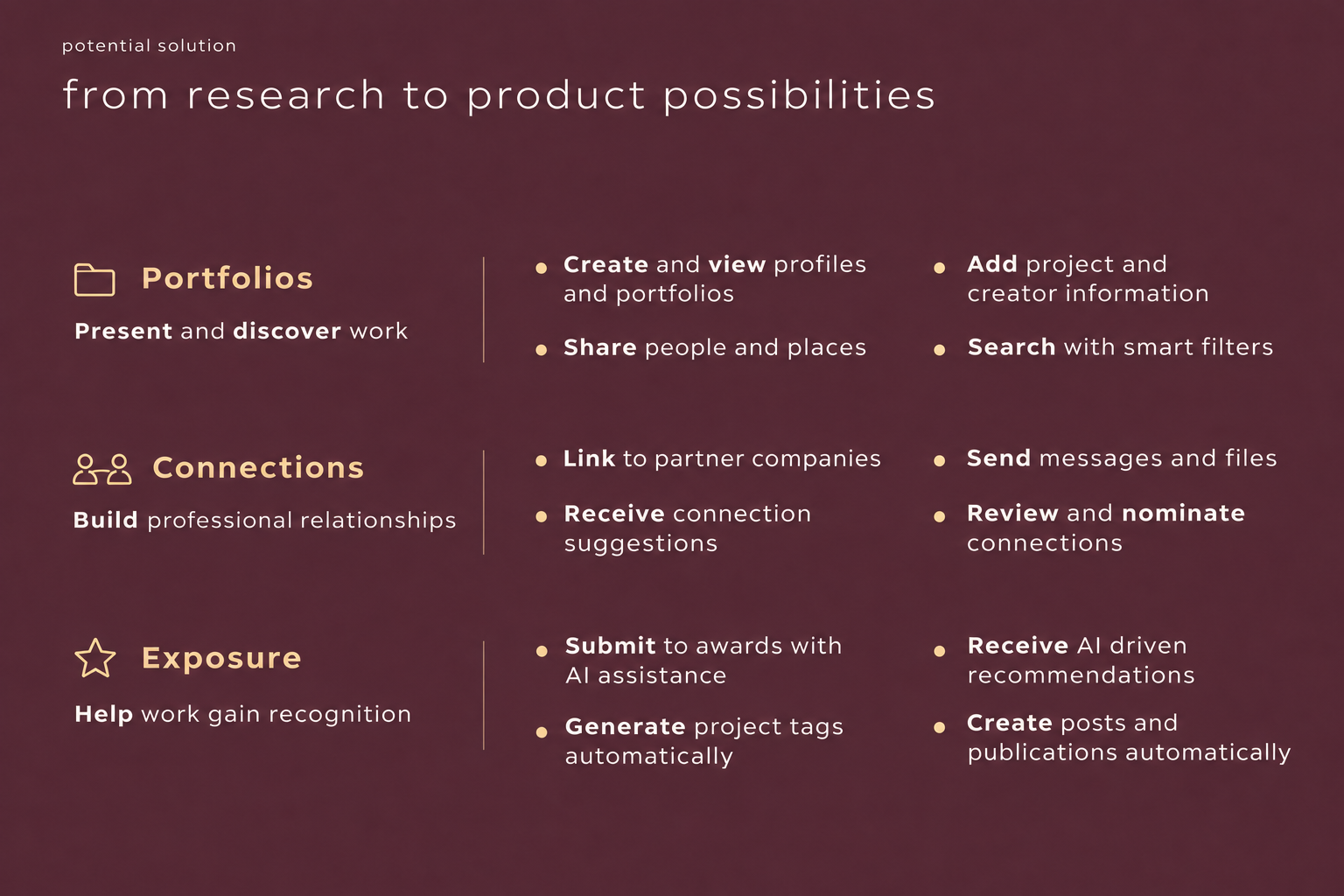
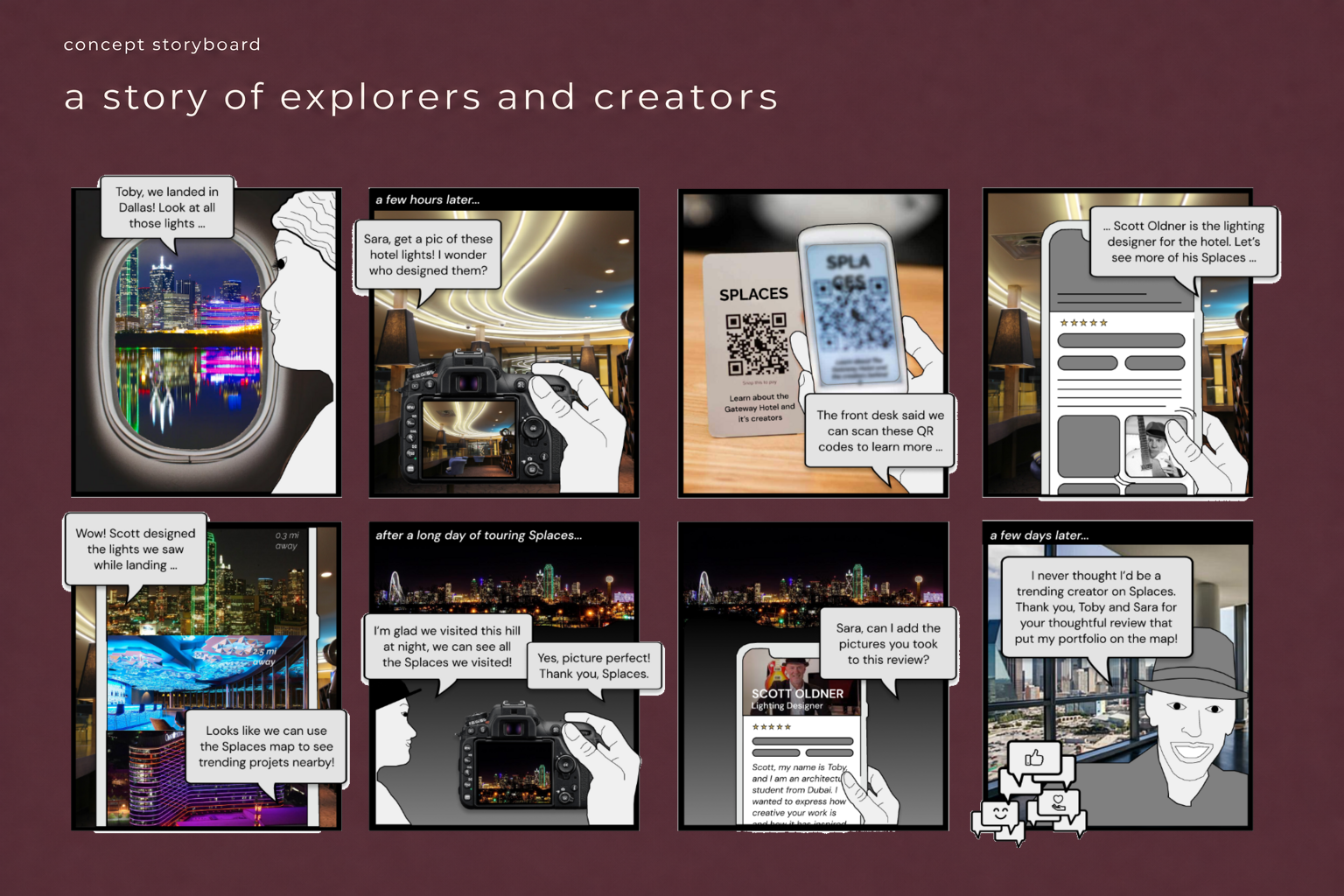
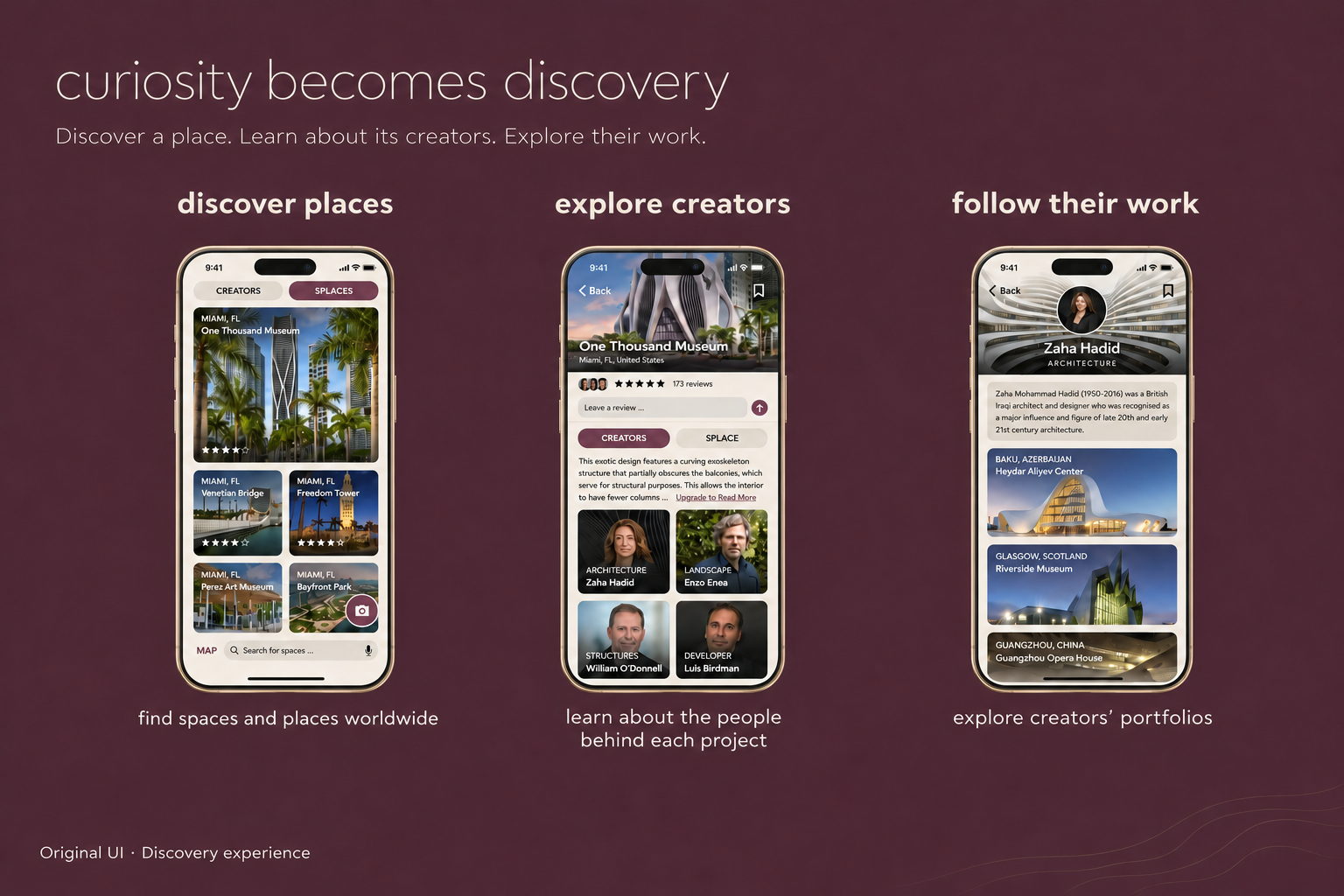
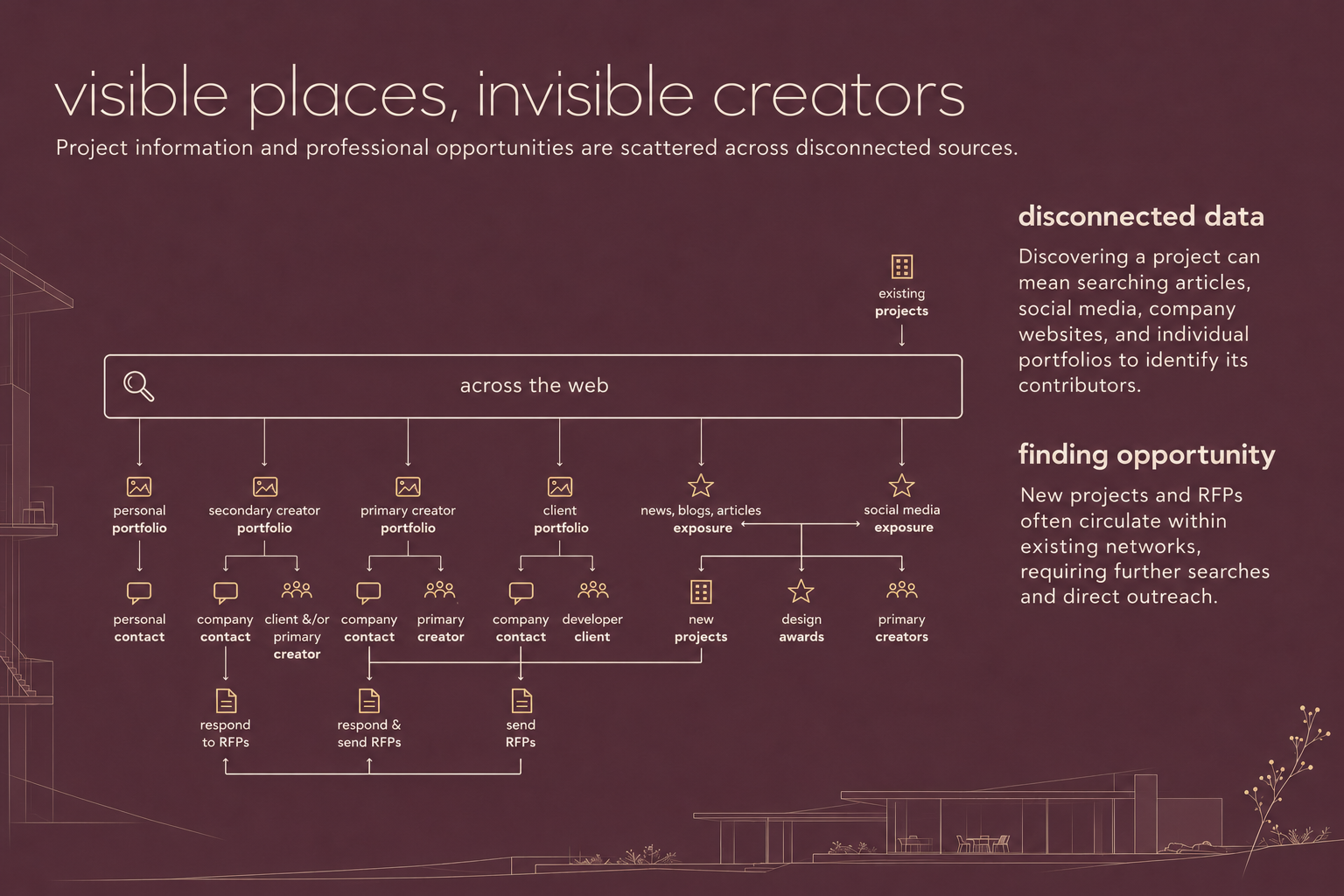
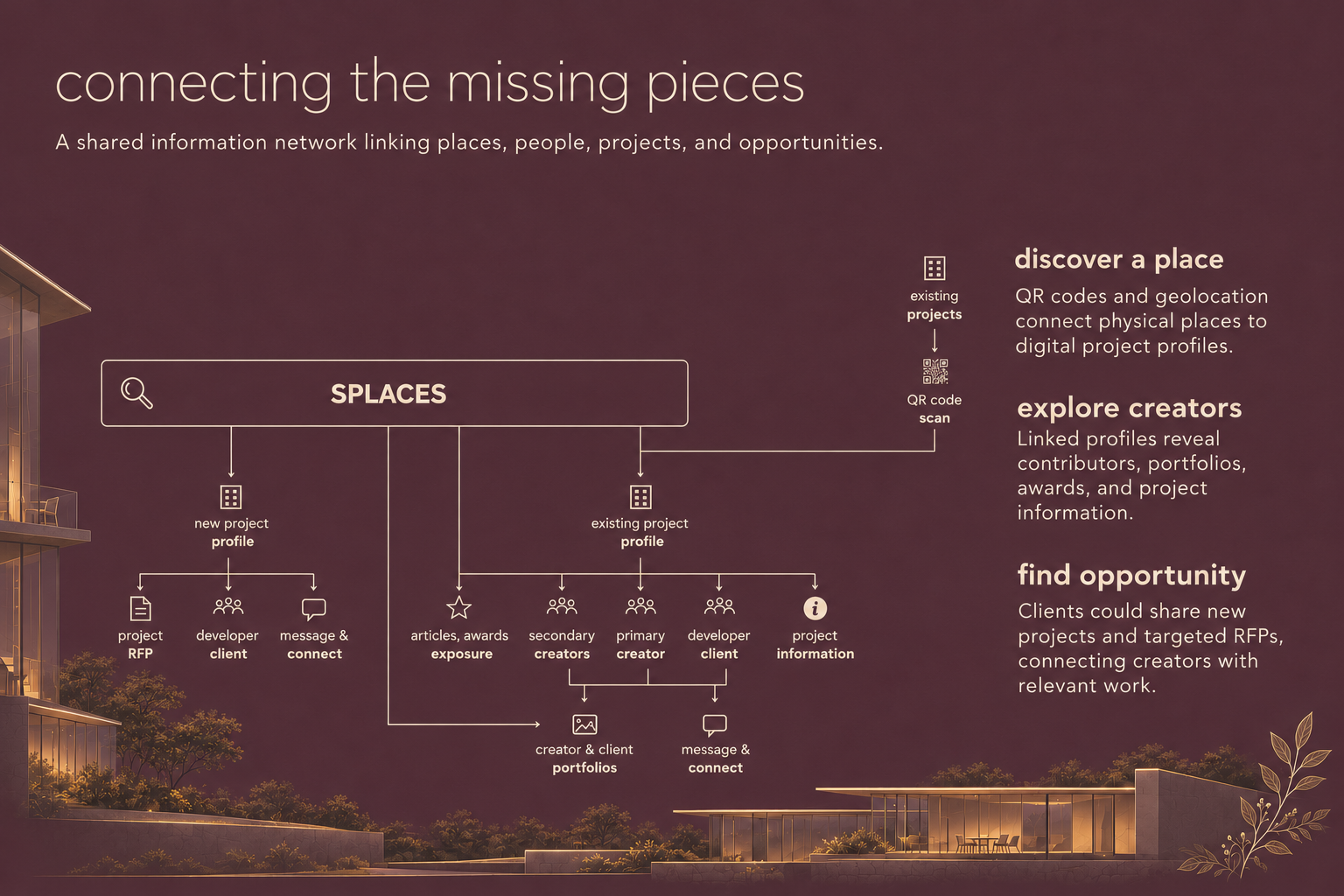
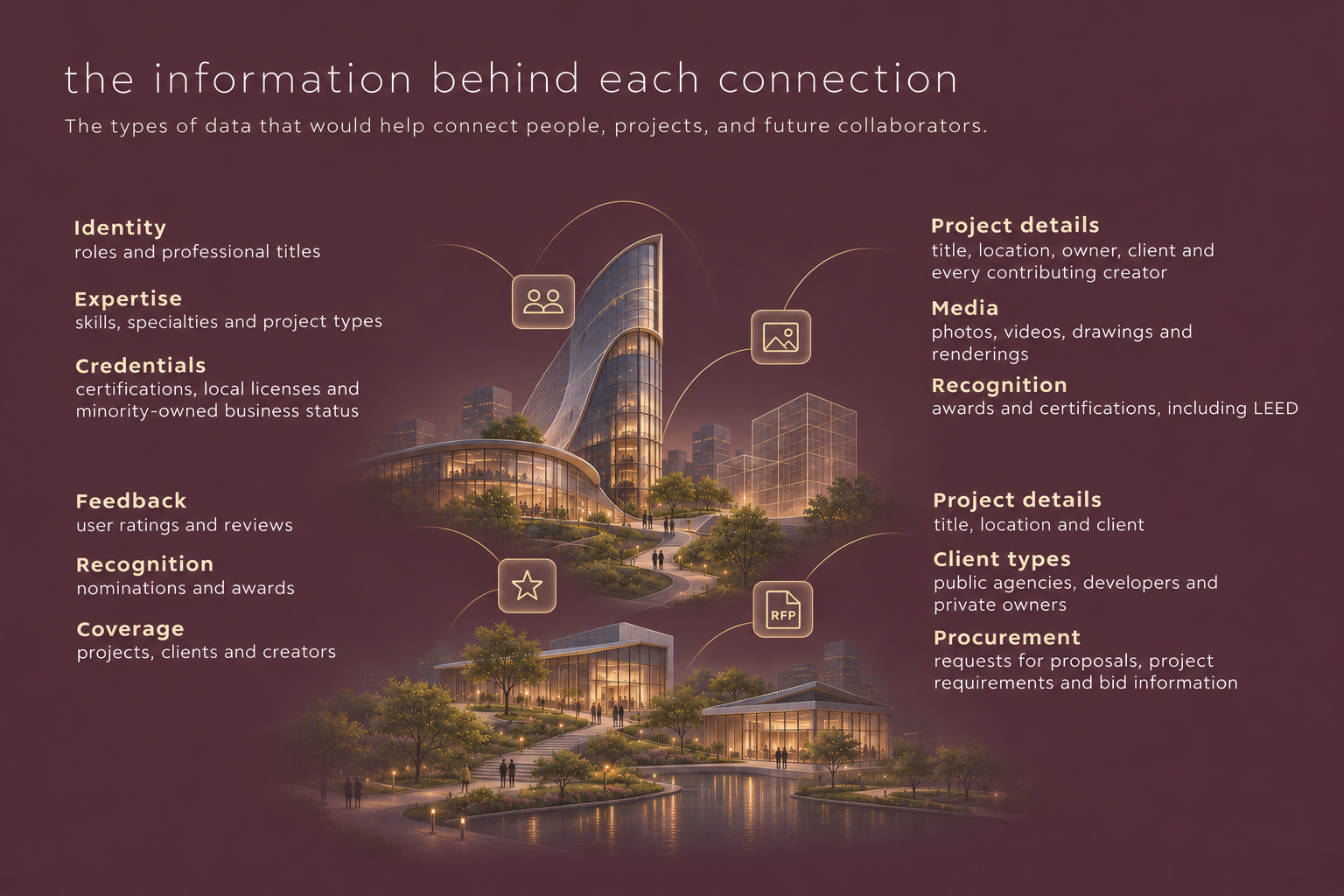
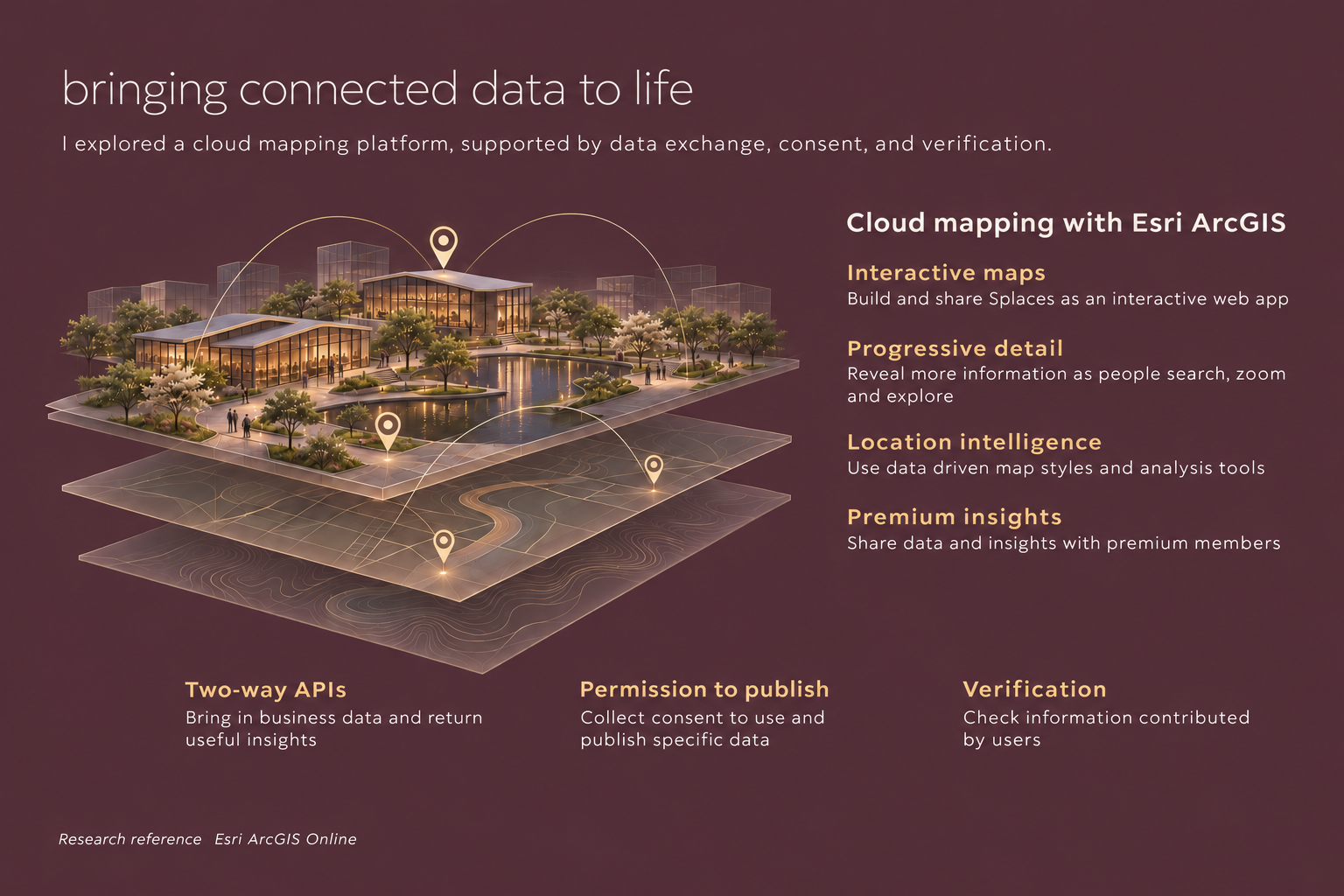
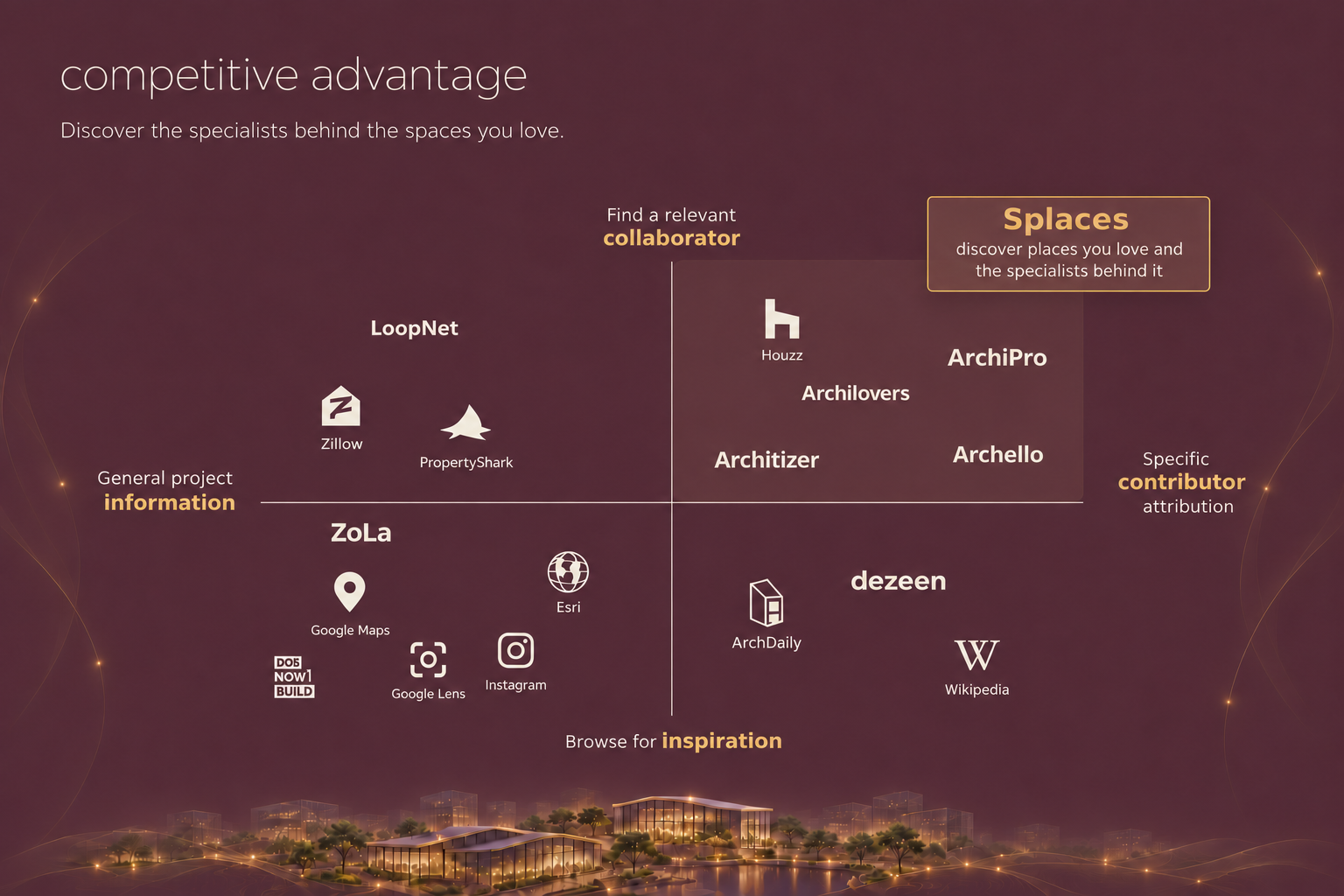
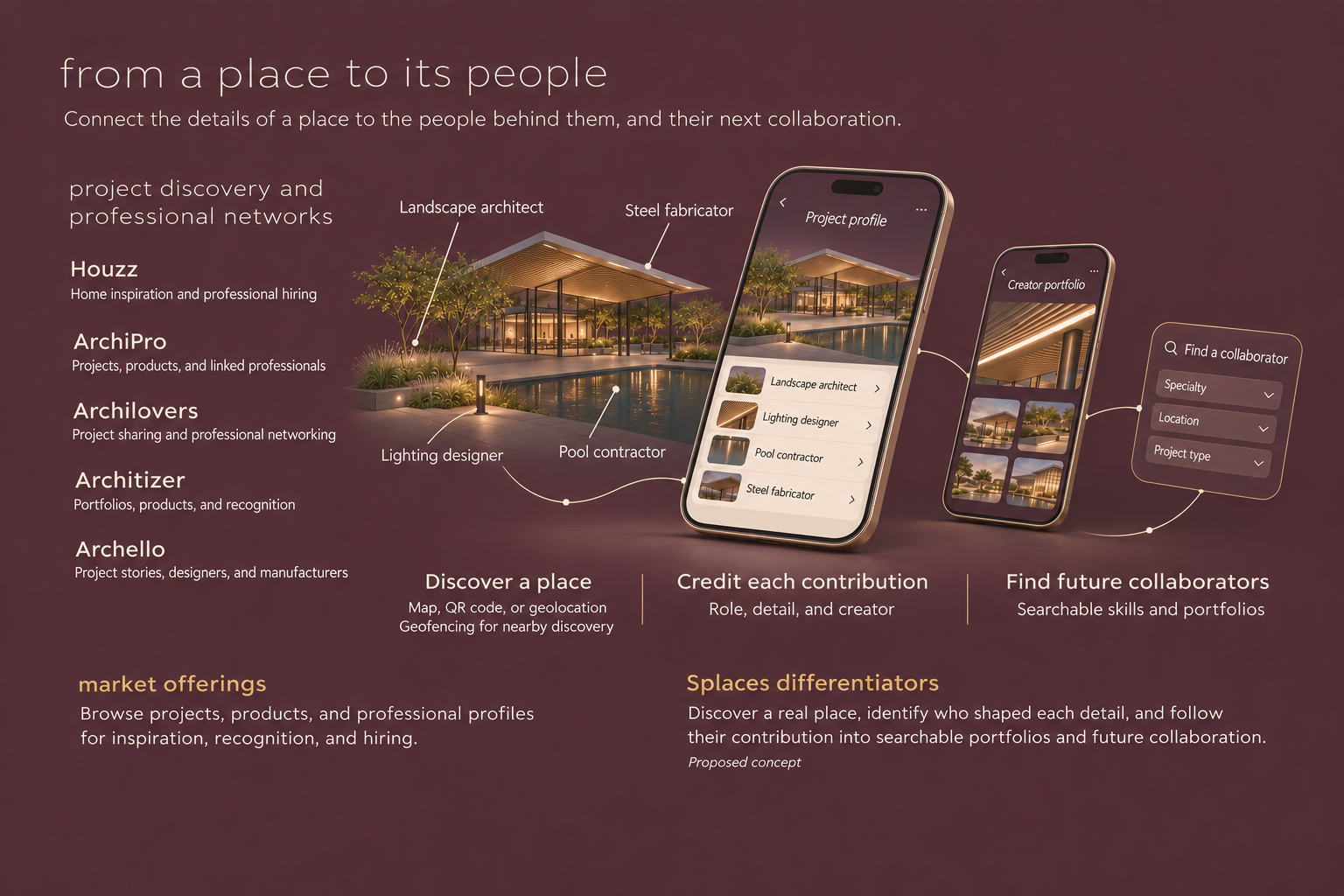
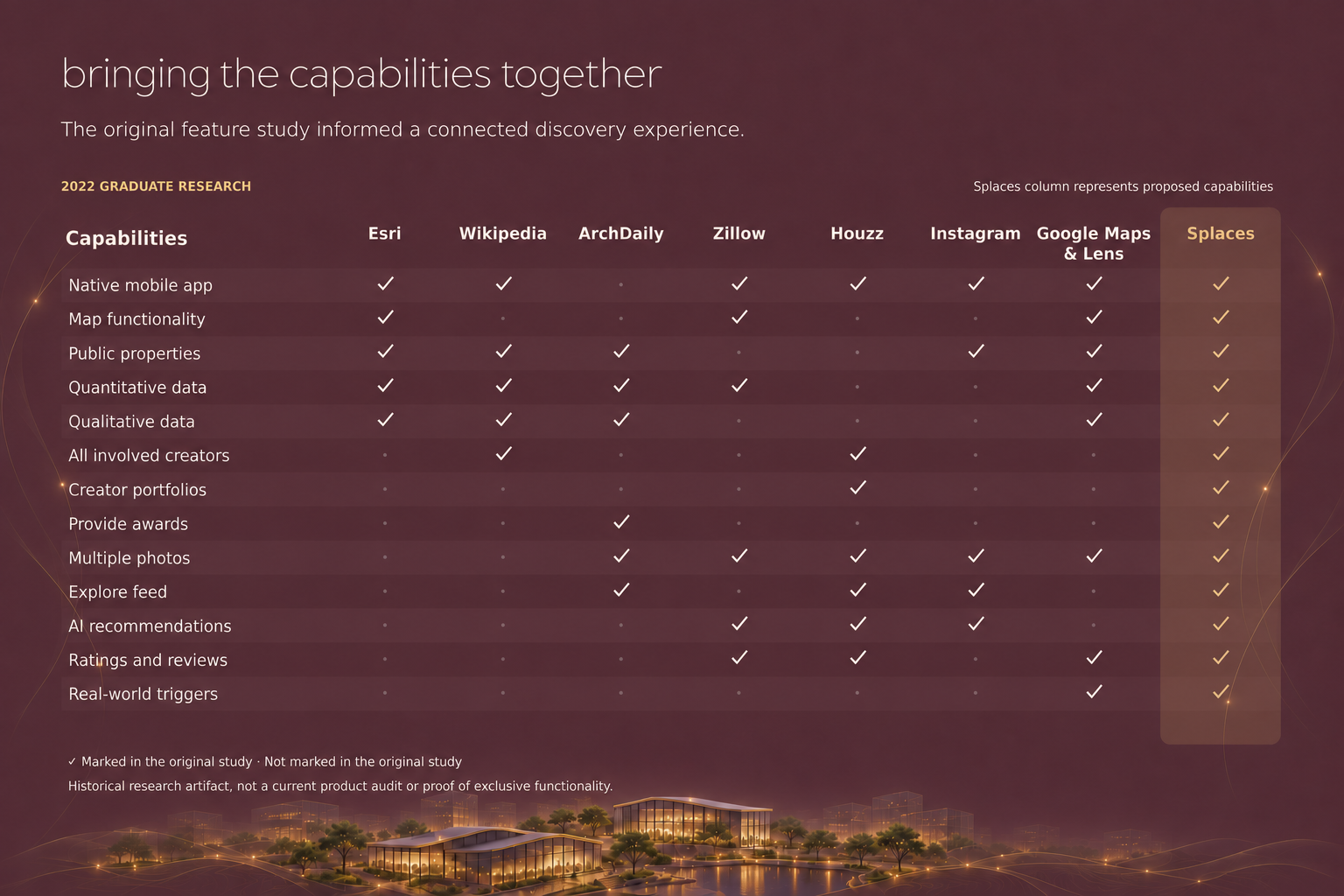
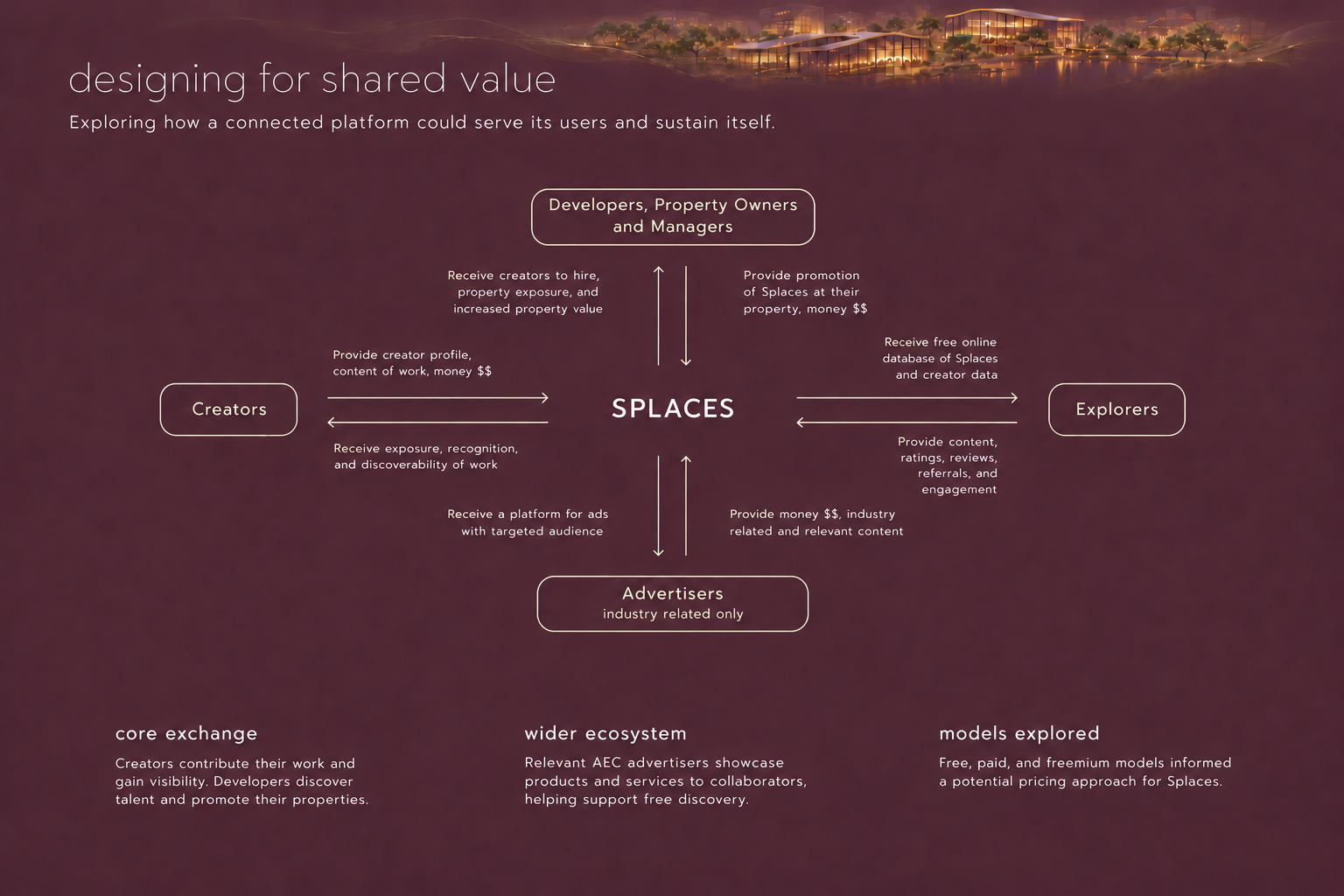
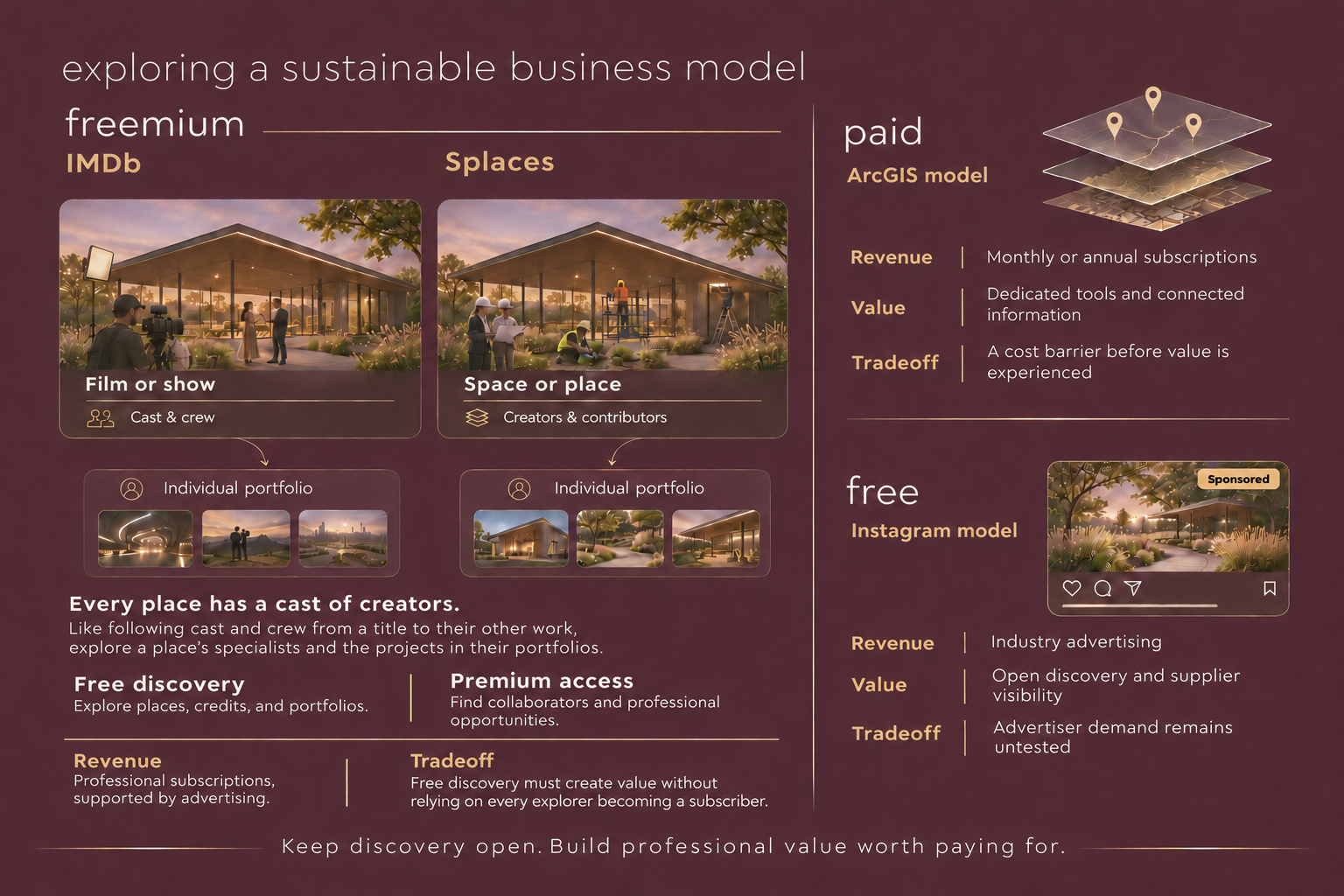
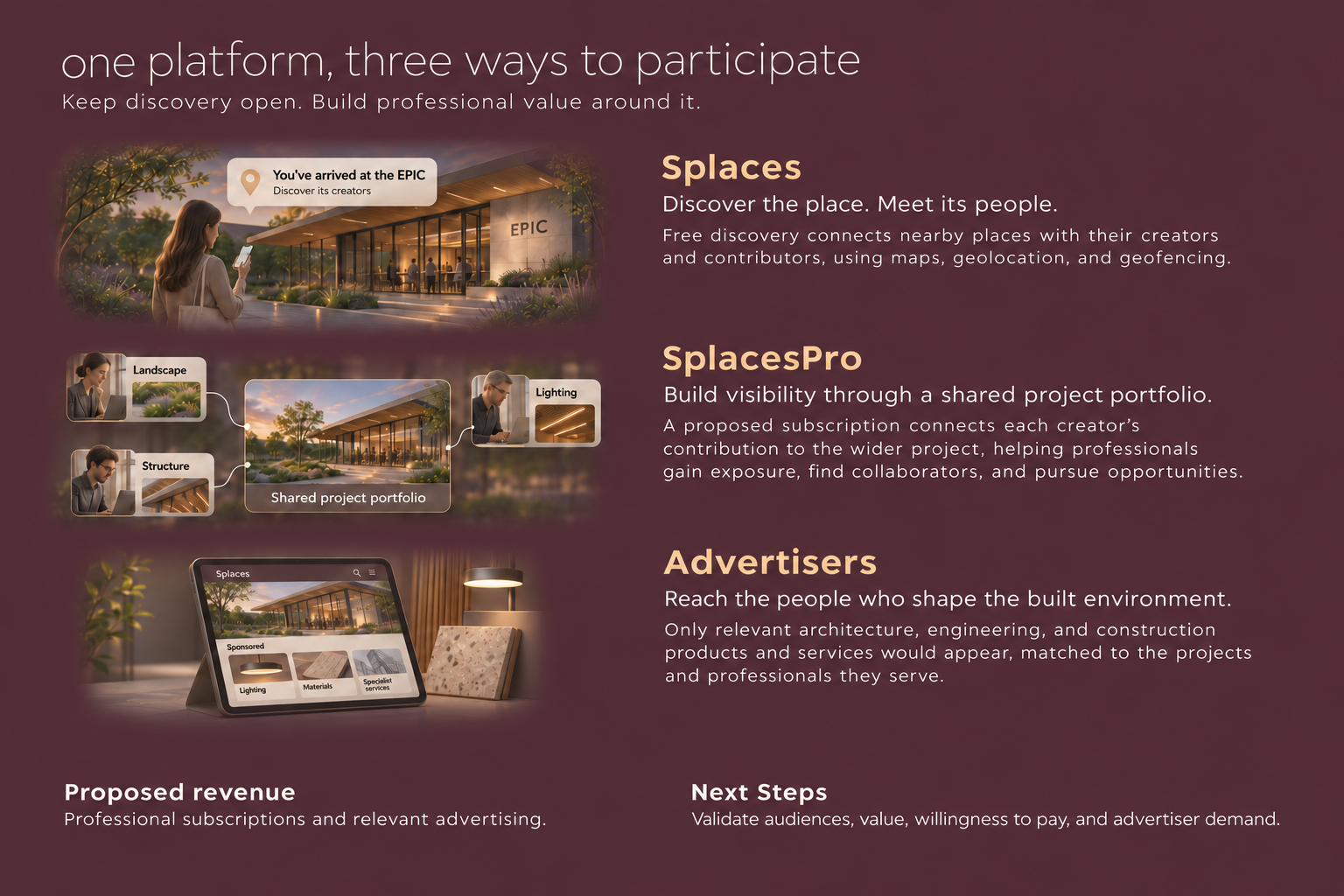
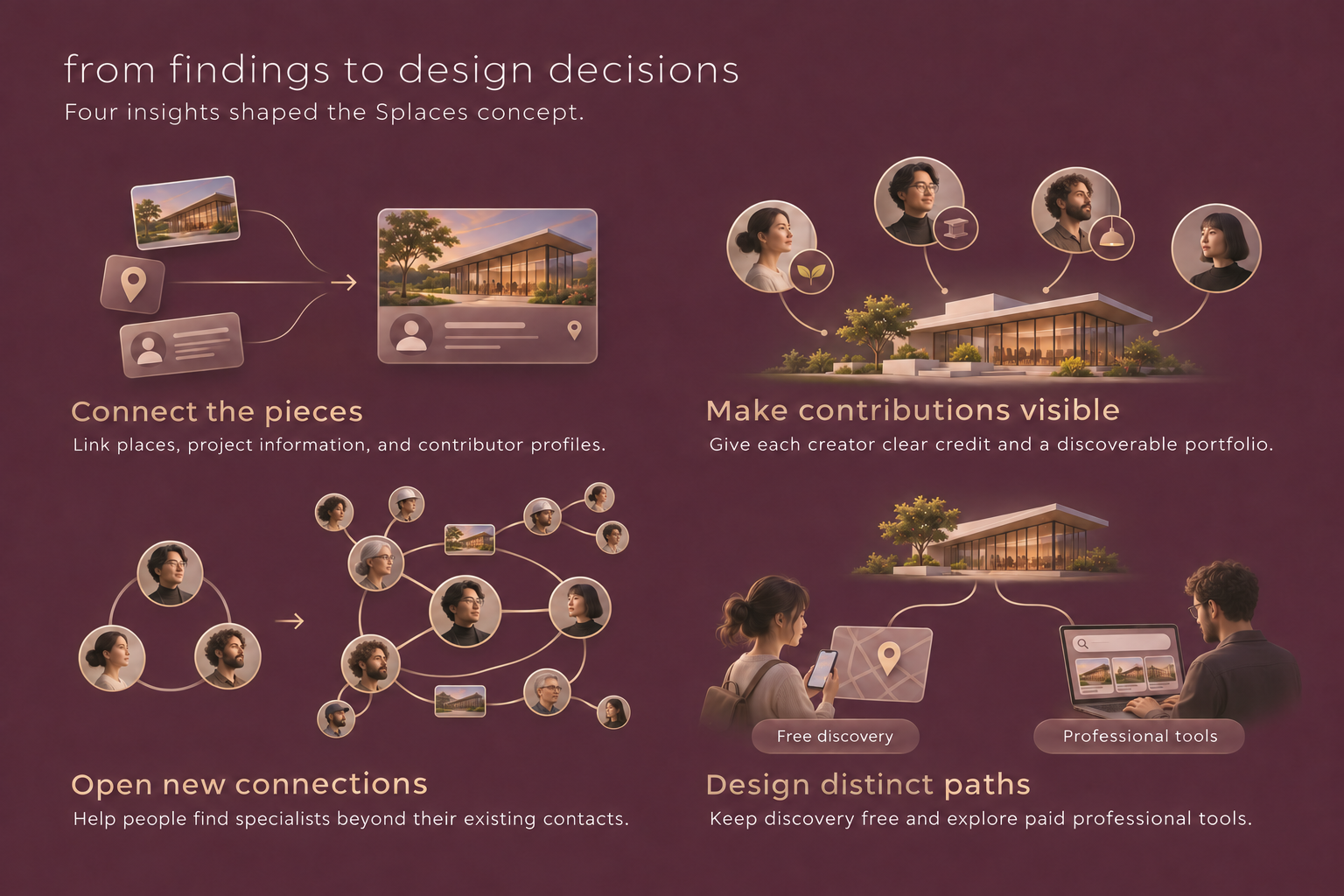
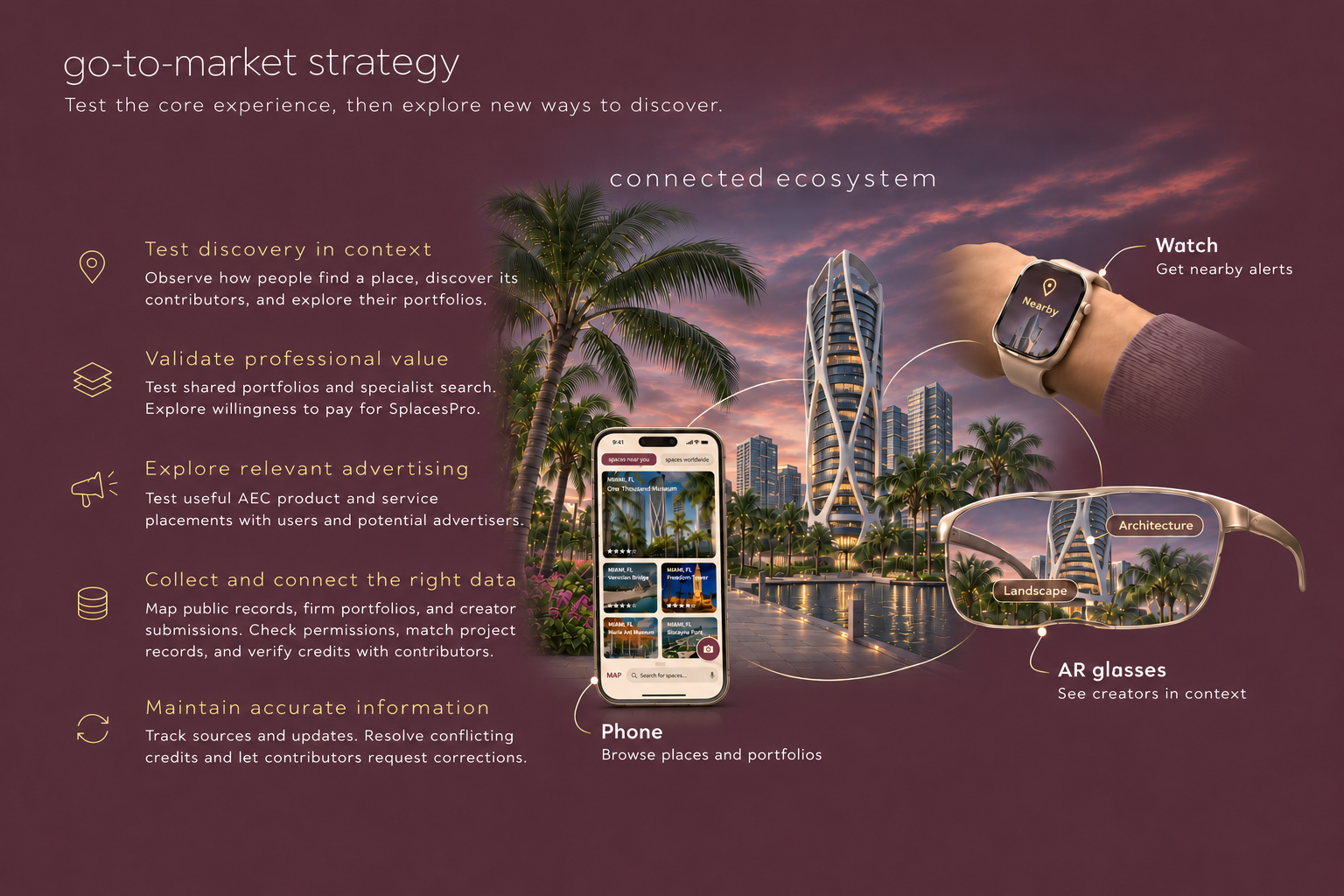
splaces coversplaces slide 2 placeholderWhy this question mattered to me: finding niche AEC creators, connecting for opportunities and making design portfolios discoverable.splaces slide 2 placeholderFrom exploration to directed research. Summer 2021 UX exploration with Professor Chris Swain, followed by summer 2022 directed research with Assistant Dean and Professor Michael Crowley, Ph.D. Three phases: value, data, and monetization.One app, different users. Early survey of 45 users across Los Angeles, Dallas, Toronto, London and Istanbul: 80% explorers and 20% creators. Findings suggested free discovery for explorers and premium subscriptions for creators.Industry interviews, part 1: Berke Kalemoglu, Corey Thomas and Amanda Eggers on trusted teams, hiring and project visibility.Industry interviews, part 2: Karim El Ibiary, Abdullah Zaidan and Paul Fishel on referrals, emerging talent and contributor recognition.splaces slide 3 placeholderSara original graduate research persona, with biography, pain points, goals and personality profile.What keeps creators out of view? Six research pain points organized around closed networks and disconnected information.Toby original graduate research persona, with biography, pain points, goals and personality profile.Lo-fi discovery flow adapted from original Splaces UI: nearby notification, Epic Tower project and contributors, creator portfolio, and explore connections.Scott original graduate research persona, with biography, pain points, goals and personality profile.Turn a contribution into a connection. Lo-fi creator flow from email invitation through professional profile creation, confirmation of project involvement, and a discoverable portfolio. Muted mauve and ivory interface.Sally original graduate research persona, with biography, pain points, goals and personality profile.Lo-fi developer flow: create a project profile, invite contributors by name, email and involvement, and confirm their contribution through email, shown with a proposed verified creator badge.Making creators easier to find. Five research needs: connected project and creator data, discoverable portfolios crediting every contributor, targeted specialist search, recognition through awards and publications, and relationships with past and new collaborators.From research to product possibilities. Proposed features for portfolios, professional connections and exposure, including smart search, messages, nominations, AI assisted award submissions, recommendations, project tags and publications.Original eight-scene graduate research storyboard. Sara and Toby arrive in Dallas, notice hotel lighting, scan a QR code, discover Scott Oldner, explore his projects, enjoy the city at night and leave a review that brings his work recognition.splaces slide 4 placeholdersplaces slide 3 placeholdersplaces slide 4 placeholderThe information behind each connection. Proposed data includes creator identity, expertise and credentials; project details, media and recognition; community ratings, reviews and nominations; and new project clients, requirements and bid information.Bringing connected data to life. Proposed graduate research data strategy exploring Esri ArcGIS for interactive maps, progressive detail, location intelligence and premium insights, supported by two-way APIs, consent to publish and verification of user contributions.Competitive advantage. Splaces connects places with their specialists. Qualitative positioning includes LoopNet and Dezeen, with highlighted information, collaborator, contributor and inspiration axes.From a place to its people. Market offerings compared with Splaces proposed contributor discovery through maps, QR codes, geolocation and geofencing, linked to profiles, portfolios and collaborators.Bringing the capabilities together. Original 2022 graduate research feature comparison across Esri, Wikipedia, ArchDaily, Zillow, Houzz, Instagram, Google Maps and Lens, and proposed Splaces capabilities.splaces slide 4 placeholderExploring a sustainable business model. Freemium IMDb and Splaces analogy, with cast and crew versus creators and contributors, individual portfolios, professional subscriptions, and paid ArcGIS and free advertising model tradeoffs.One platform, three ways to participate. Splaces offers free nearby discovery through geolocation and geofencing. SplacesPro proposes shared project portfolios and professional subscriptions. Relevant AEC advertisers support discovery. Next steps validate audiences, value, willingness to pay and advertiser demand.From findings to design decisions. Connect fragmented project information, make every contribution visible, open second and third degree connections through linked portfolios, and design distinct paths for free discovery and professional tools.Go-to-market strategy with a connected phone, watch and AR glasses ecosystem. One Thousand Museum rendered in natural white concrete and cool glass against the established mauve background.