Deer Diary
a 2027 portfolio
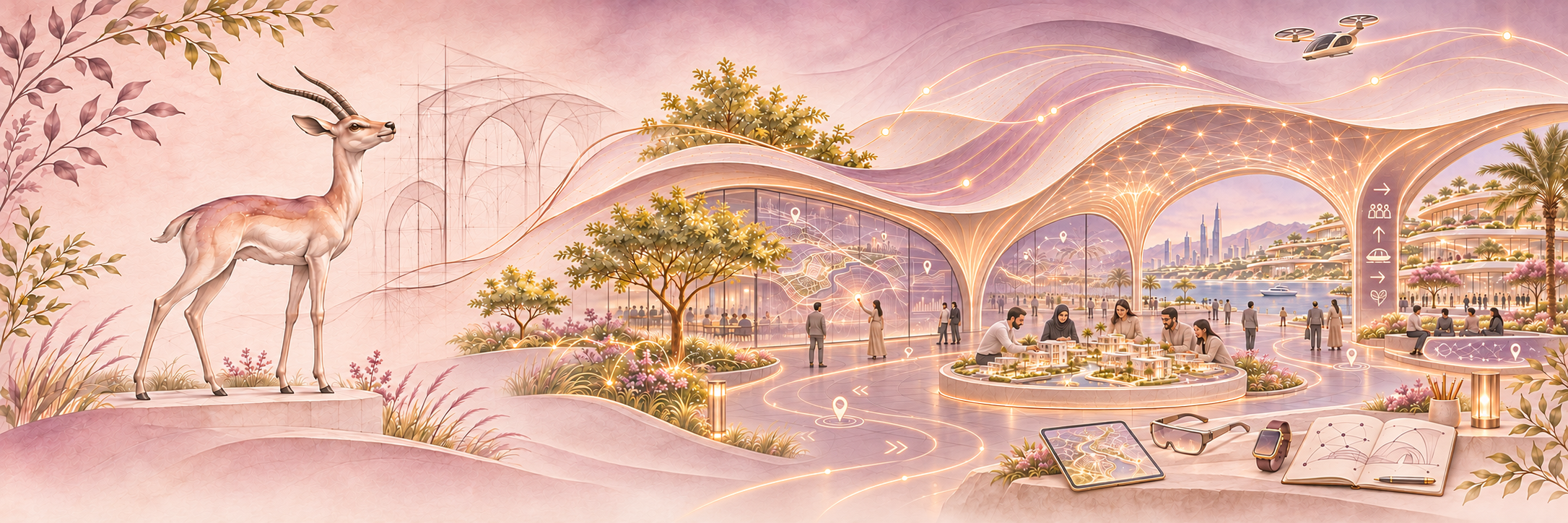
In Arabic, Reem means gazelle and deer diary plays on that. It’s curious, consistently looking beyond what is obvious and questioning fundamental constraints shaping a system, nimble, moving fluidly across disciplines, while being graceful and intuitive, bringing softness and storytelling into complex systems.
dots
written not as a here are the projects I worked on portfolio, but rather a story of why they were pursued, what I learned, and how each professional experience led to the next; the seeds collected, skills acquired and connections made.
2010 • childlike curiosity
By 2010 I had taken 15 years of art classes at school, yet came home every day excited to make something new. From a colored pencil drawing with googly eyes and twisty pipes to a digital composition in Microsoft Paint or a custom 3D home in The Sims. I always loved creating things and advocated to study art alongside mathematics and economics as my higher-level subjects for the International Baccalaureate diploma, which I explored Persian miniature art of its final extended essay. My love of making things grew into a curiosity about the systems behind them.

2011 • global perspective
Growing up in Saudi Arabia, my experience of government was different from an American classroom, and economics introduced me to questions about how institutions shape lives, from taxation to freedom to drive. That curiosity grew at the Global Young Leaders Conference in Washington, D.C., where I explored my voice, and while I connected the dots between the global business and art summer courses I was taking at Columbia University.

2012 • independence
From founding a charity club to addressing graduation as Senior Class President, I loved getting involved in my communities. Those experiences gave me confidence as a public speaker and showed me how vision and leadership could turn an idea into something people wanted to be part of. After graduating from the American International School of Riyadh, I left the desert palms of my first 18 years for the tropical palms of Coral Gables. I began architecture school at the University of Miami as freshman class representative, in true Reem fashion.

2013 • placemaking
Through a summer program abroad called the Grand Tour of Europe, I studied urban design across Spain, France, Italy, and Greece, observing and sketching how streets and public spaces shape everyday life. My interest expanded from individual buildings into the plazas and green spaces surrounding them. Dean Elizabeth Plater-Zyberk, co-founder of the New Urbanism movement, called these the spaces in between, where placemaking became a way to think about the relationships between people and their environments.

2014 • visual translation
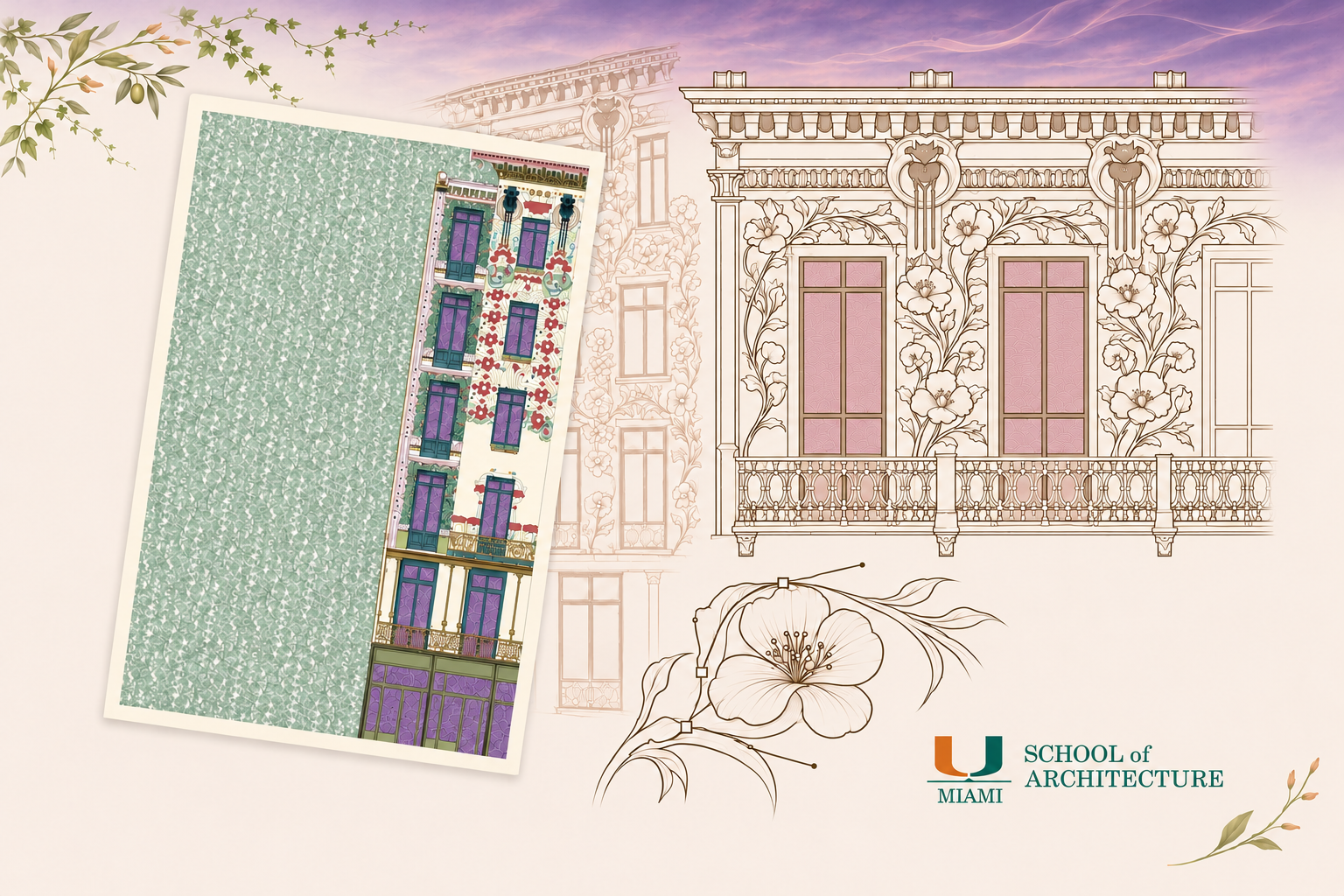
I produced an architectural graphic recreating the ornate Casa Galimberti façade in Milan line by line as a vector drawing in Adobe Illustrator. Translating its layers, windows, and details into a visual system taught me to simplify complexity while preserving the façade’s distinctive Art Nouveau character. Selected for a School of Architecture postcard, it was an early experience of seeing something I designed move beyond the studio to represent a larger institution, connecting architecture, graphic design, and communication.
2015 • spatial storytelling
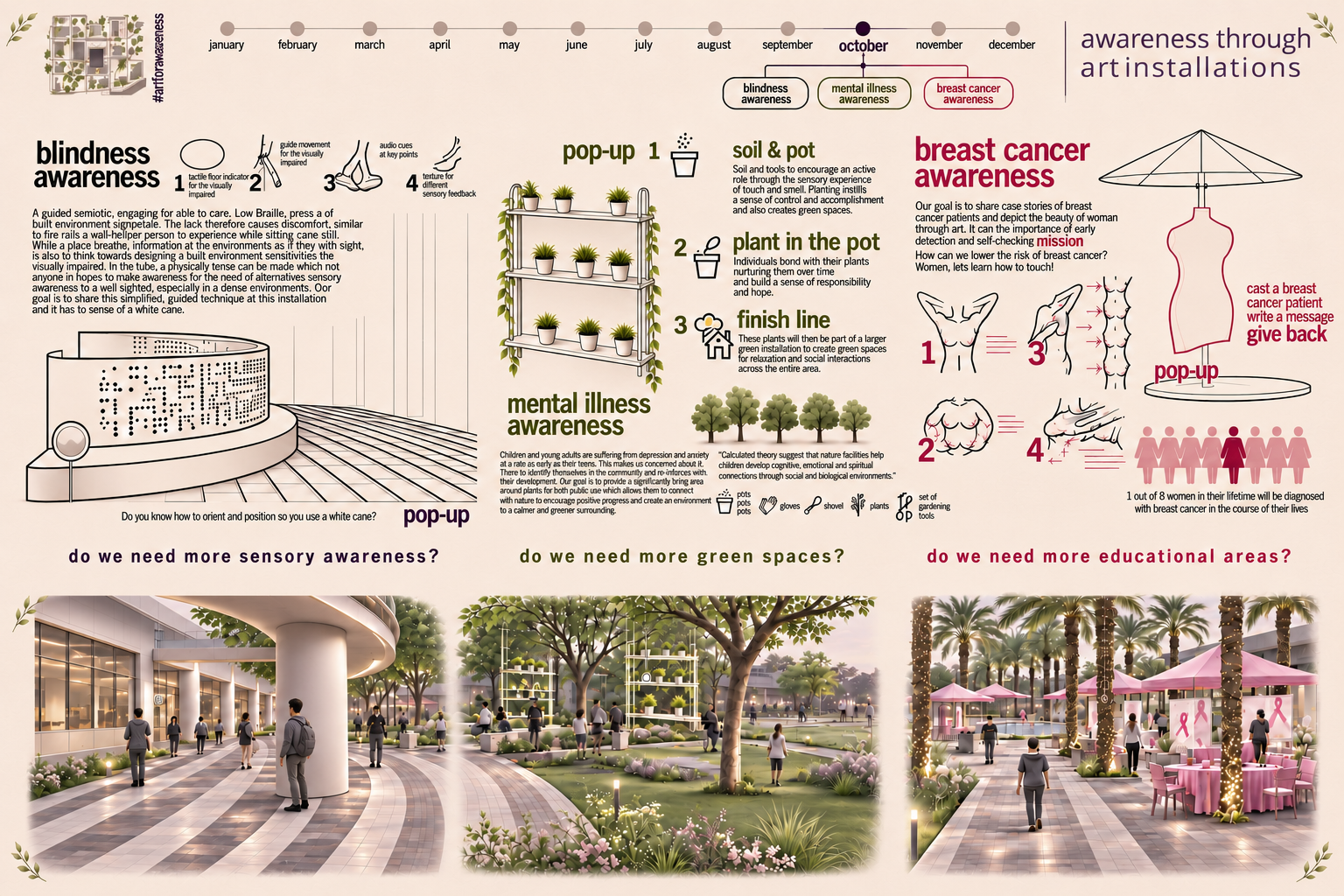
In an architecture studio sponsored by the UM Miller School of Medicine, I explored how art installations could bring attention to health and social issues within existing spaces. My team’s proposal addressed visual impairment, mental health, and breast cancer through everyday spatial experiences. I began to see space as a medium for communication, with art inviting people to notice, question, and engage with health issues in everyday life.
2016 • principles of scale
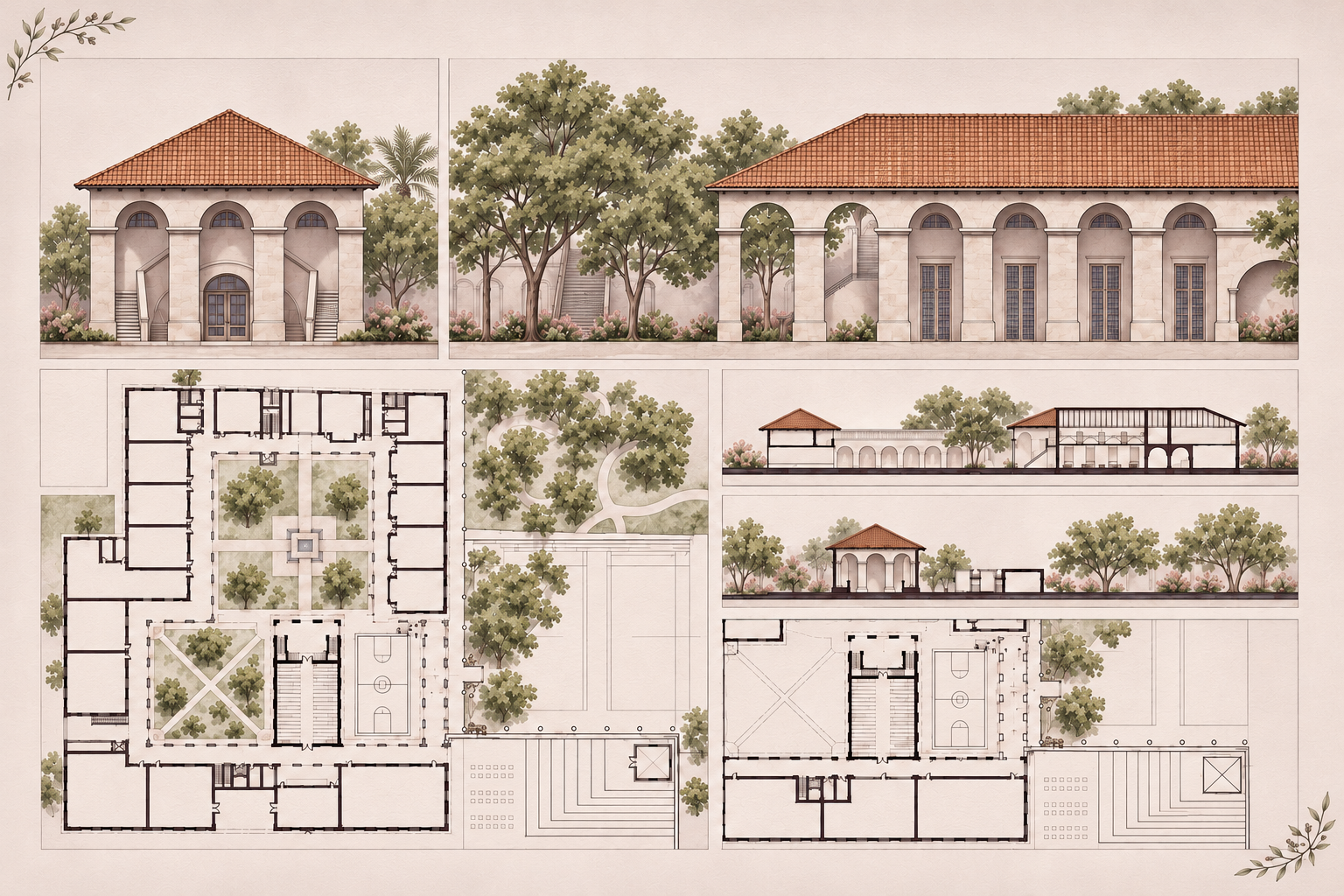
Selected for an advanced studio sponsored by Robert A.M. Stern Architects, I collaborated on a master plan for the St. Stephen’s campus in Coconut Grove. We explored how a school could meet future needs while remaining grounded in traditional design principles. Moving between the details of an arcade and the plan of an entire campus taught me to see how individual design decisions shape a larger whole.
2017 • urban strategy
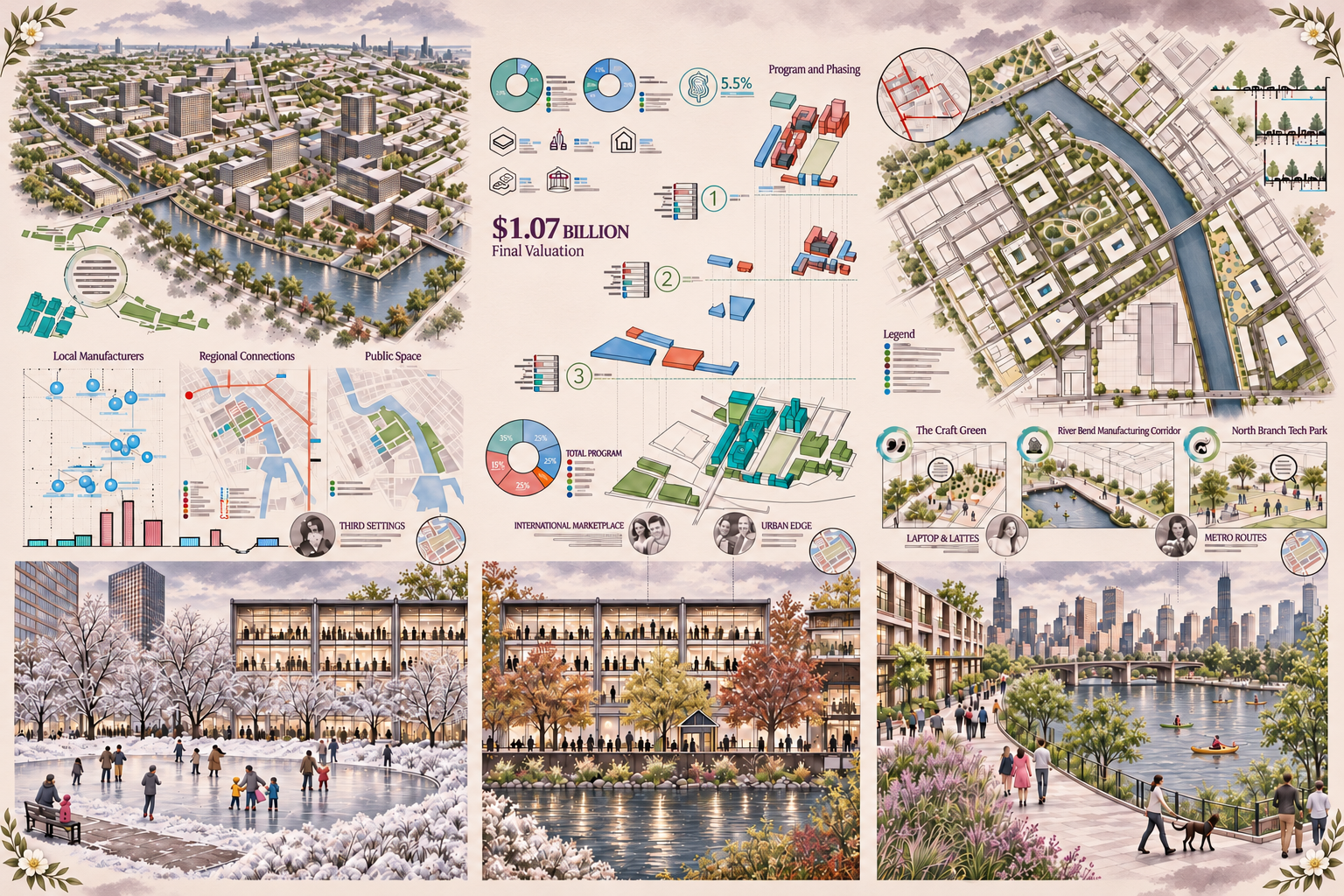
I graduated from the five-year NAAB accredited B.Arch program with a focus in Urban Design and a second major in Economics, seeing the world through spatial design and market dynamics. Working with a multidisciplinary team, Made in Chicago was submitted for the Urban Land Institute Hines Competition, drawing on the city’s manufacturing history. The proposal received two internal awards, for best overall project and best presentation design, reinforcing the value of design communication.
2018 • architectural design
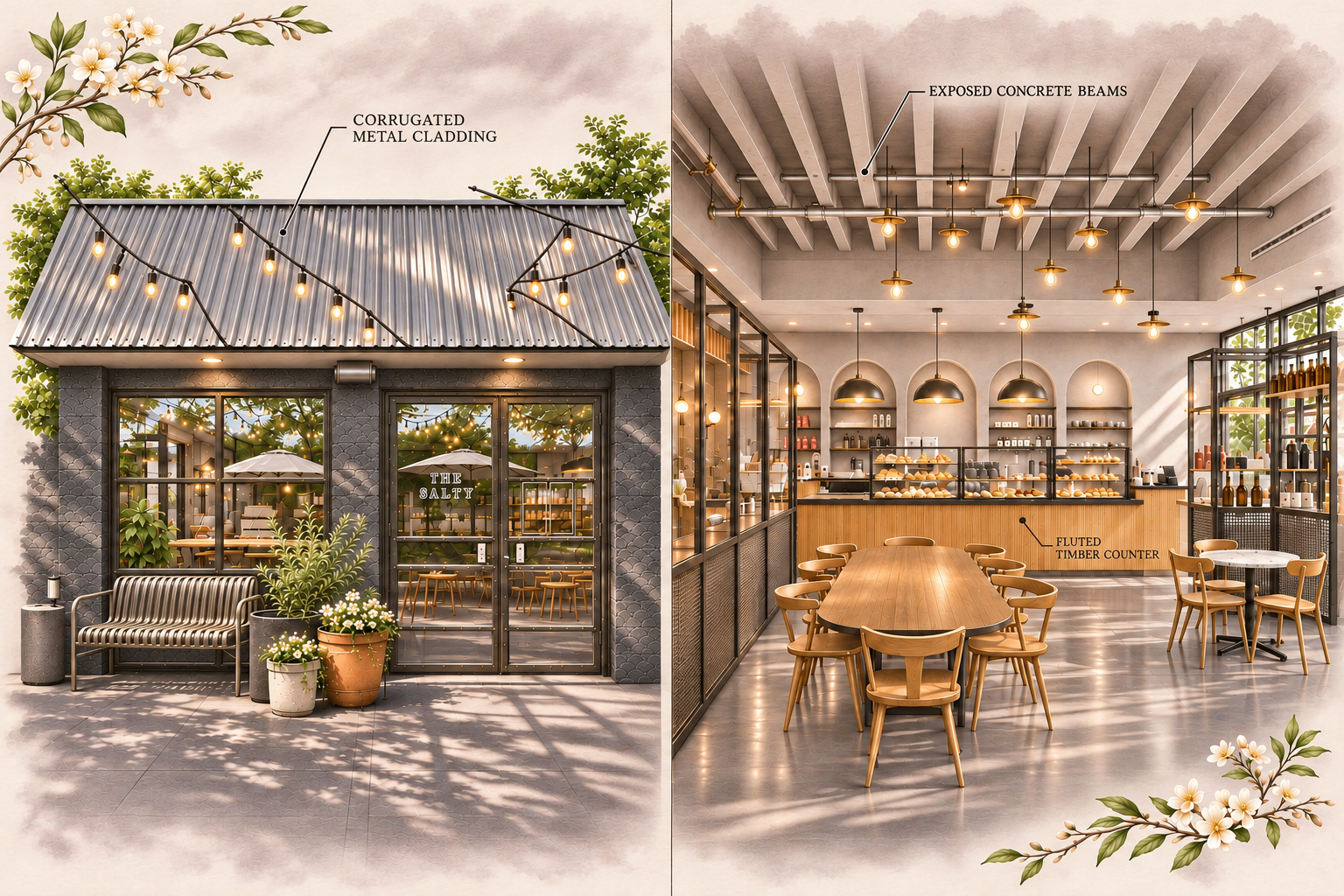
I began my professional career at LRK, the firm behind FedEx campuses and Disney spaces. When The Salty Donut, my favorite donut shop in Miami, hired LRK’s Dallas office to bring it to the Bishop Arts District, I was thrilled to lead the architectural design from concept through construction. I saw design theory become professional practice, navigating client relationships, budgets, and city coordination to connect creative intent with real-world execution.
2019 • building construction
At LRK, I supported construction administration for a luxury residential tower designed for StreetLights Residential and Westdale Real Estate Investment. I represented the firm in meetings with the owner and contractor and on site walks. Reviewing Requests for Information and Submittals showed me how design intent is carried through construction. From façade details to the initial parti, I saw how decisions at different scales could shape a skyline.

2020 • career reinvention
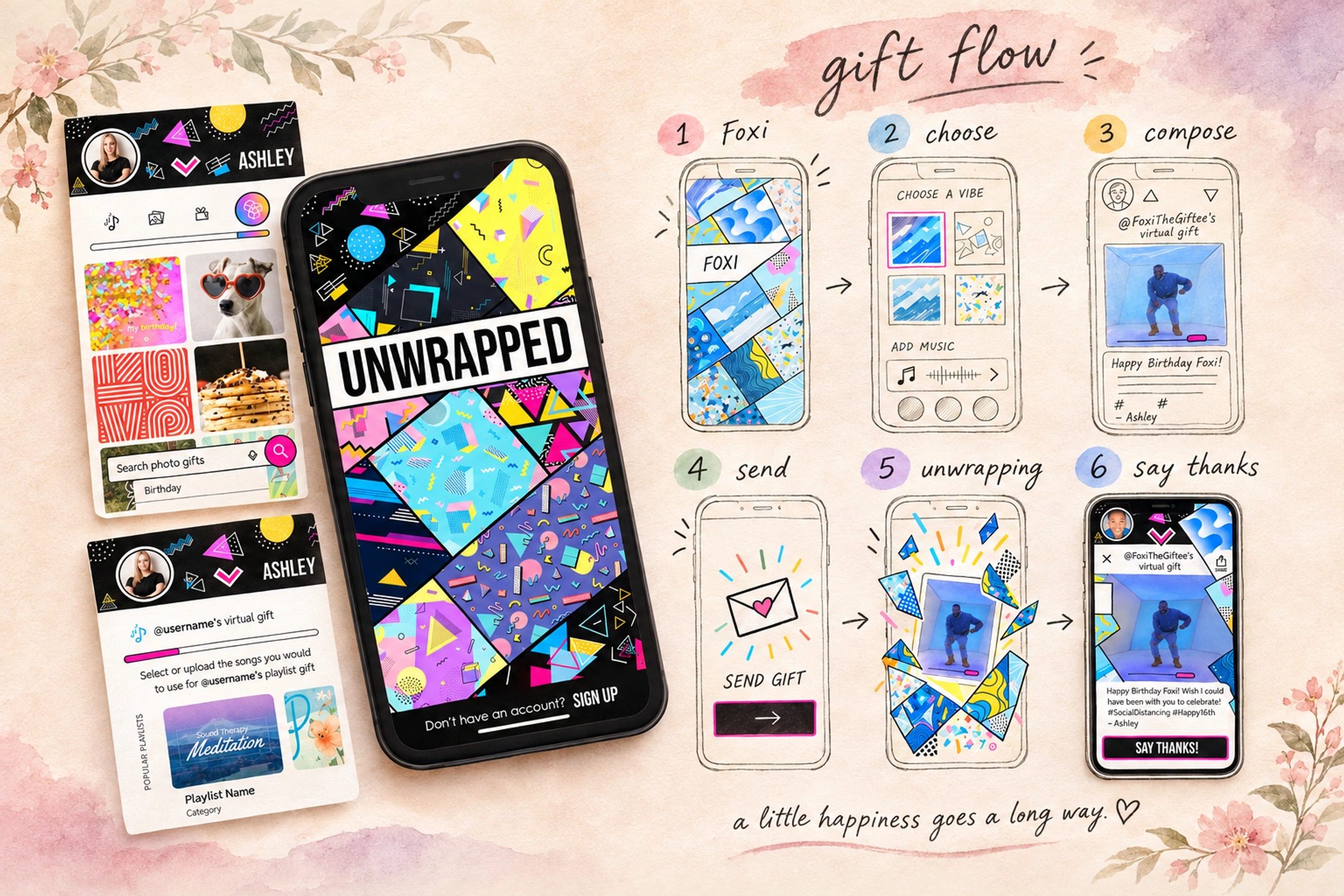
In January 2020, I left my stable job in architecture to switch careers. Soon after, the world shut down. I put that uncertainty to use by joining SMU’s six month UX design certificate program, where I led a team creating a virtual gifting app for those with more creativity than cash. Alongside the program, I applied for UX design roles and a USC graduate program. By the fall, I landed and decided to pursue both.
2021 • integrated design
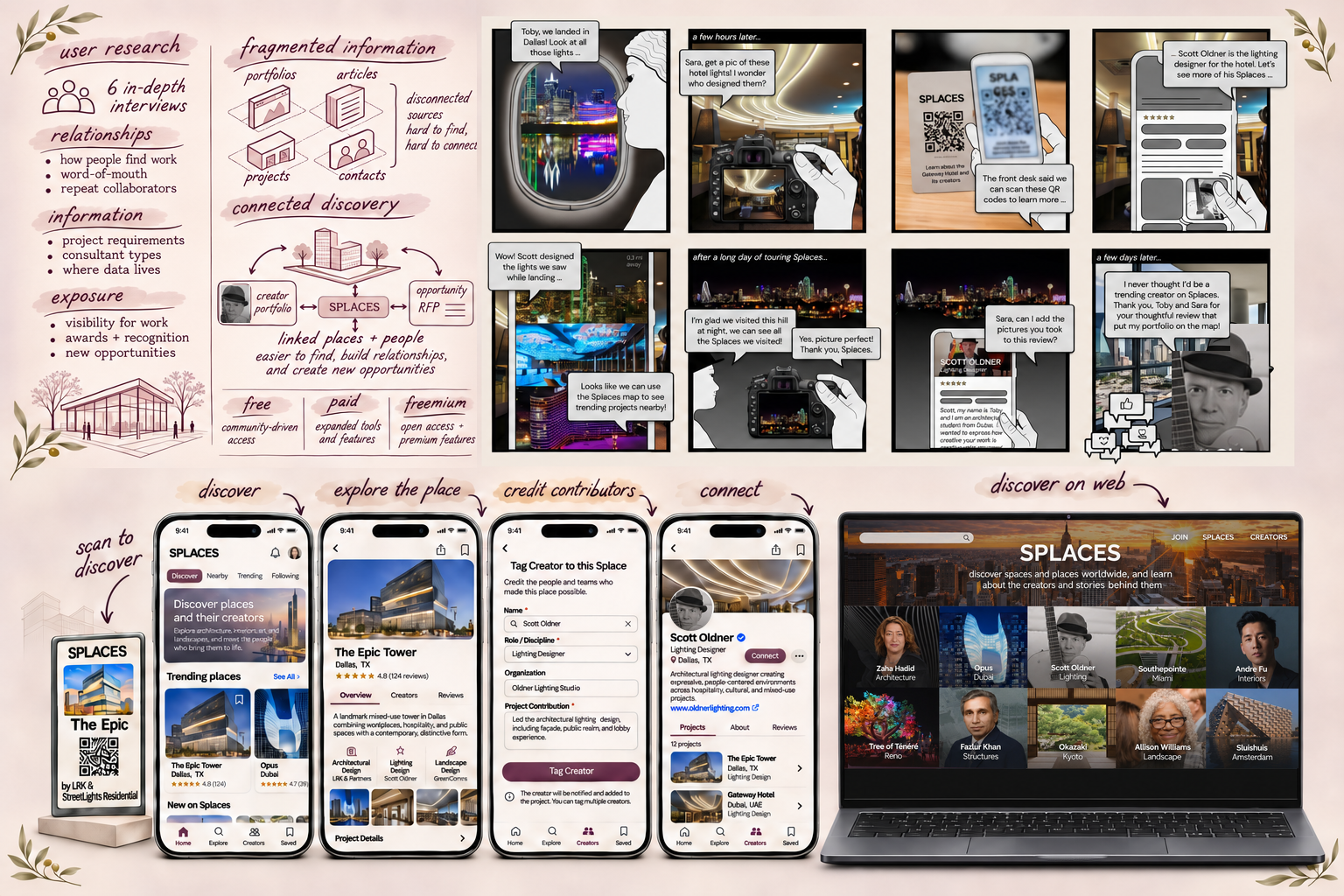
The M.S. in Integrated Design, Business and Technology at USC’s Iovine and Young Academy is a program that brought together disciplines I was already exploring. Through a research project called Splaces, I brought architectural pain points to the application development space with a vision to connect information about spaces to their creators, exploring how information, visibility, and relationships shape recognition and opportunities for professionals in the design and construction industry.
USCSplaces
2022 • connected UX
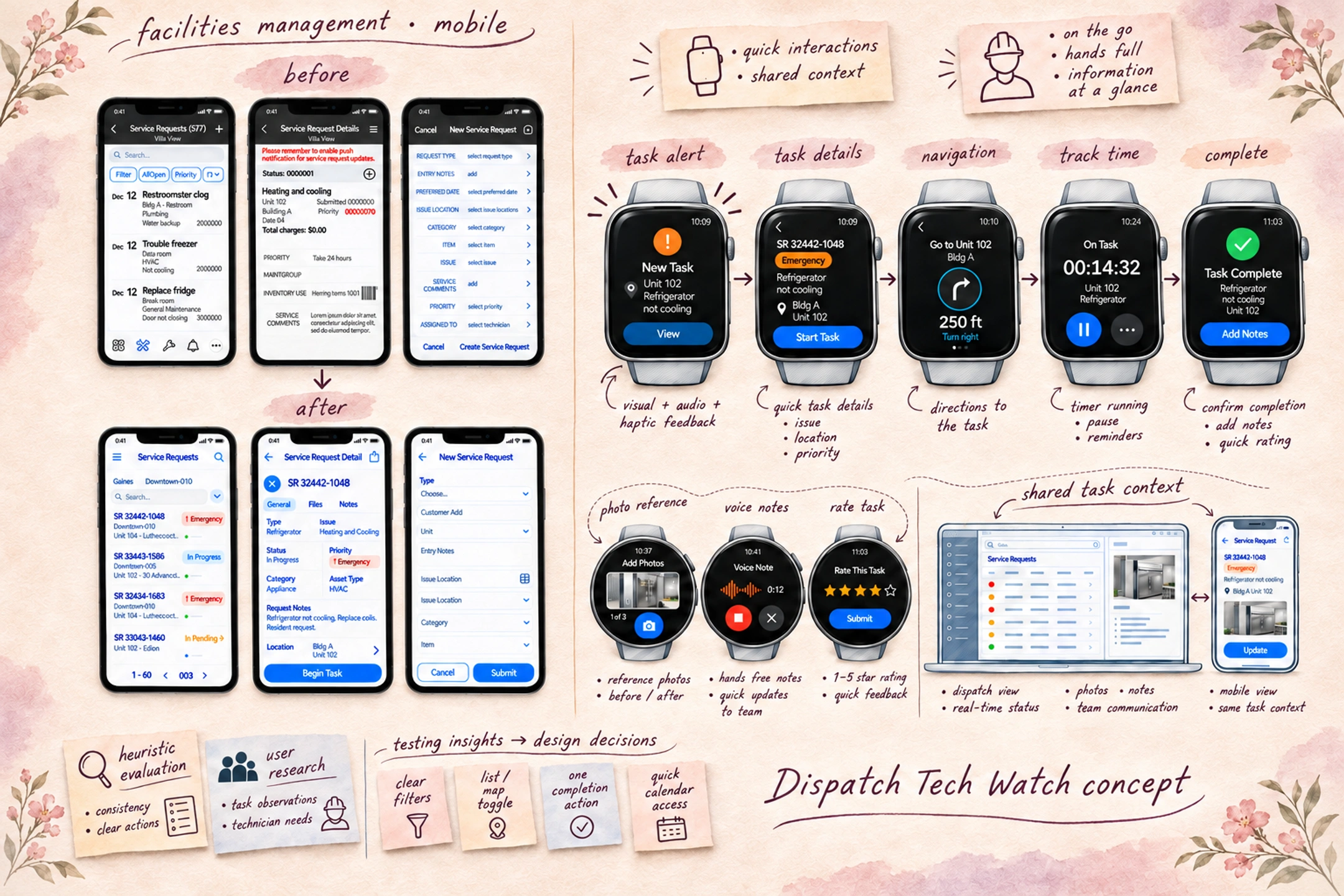
My design educations began to merge as the multifamily properties I once designed became the spaces I was studying to improve property operations for. At RealPage, I took on UX design leadership of the Facilities Mobile application, partner web and watch applications, and a Vendor Management platform. I designed technician dispatch experiences for day-to-day operations and explored ideas for smart contracts and blockchain. This work connected the spaces we inhabit with the technology used to run them.
2023 • end-to-end UX
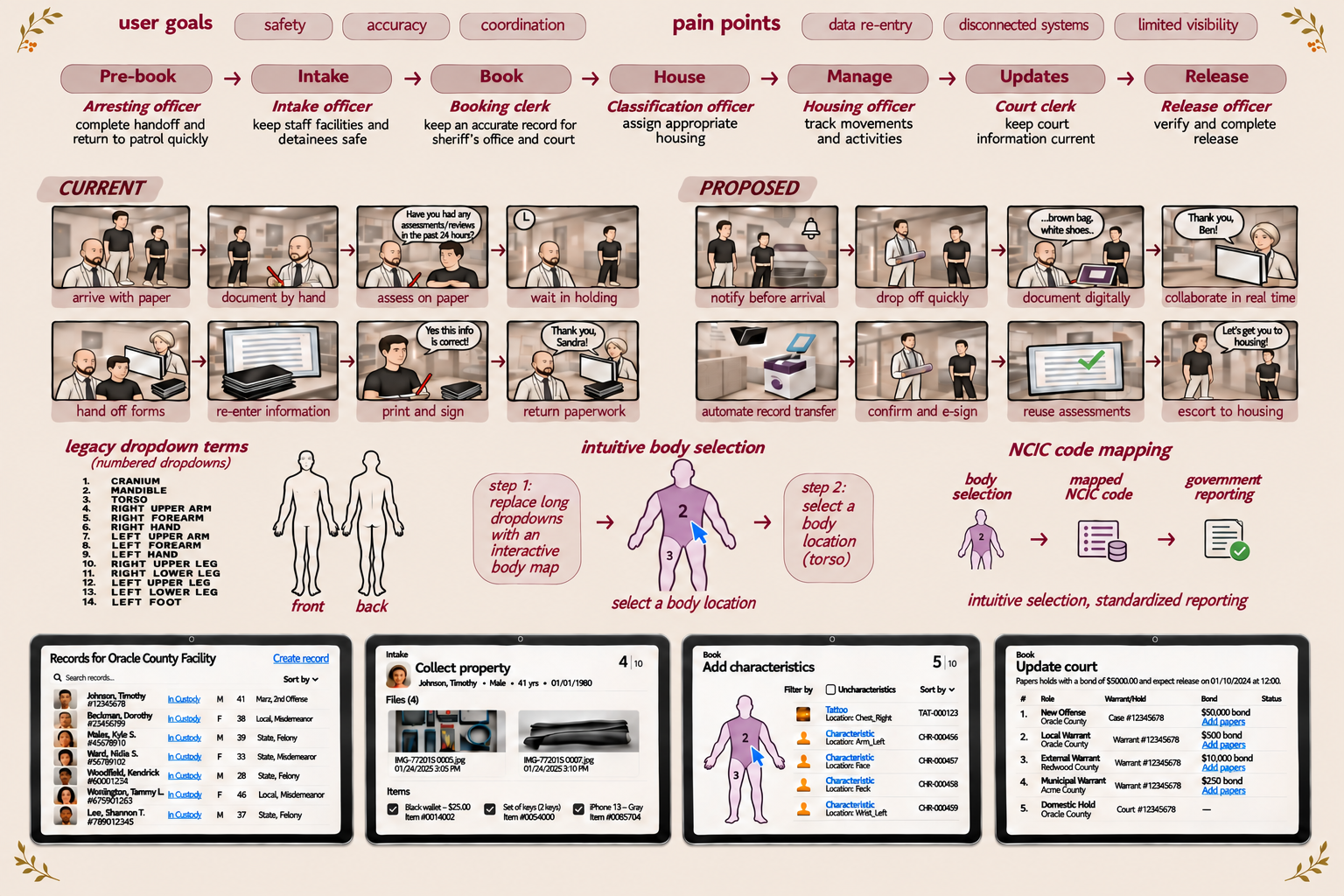
Transitioning into public safety at Oracle, I partnered with local government agencies to research and lead the design of a booking and housing facility management solution. Seeing the application launch at the Archuleta County Sheriff’s Office in Colorado was especially rewarding as booking time fell from 45 to 15 minutes, a reduction of ~ 70%. It showed me how user research and thoughtful workflow design could make a tangible difference in daily operations.
2024 • product architecture
My design role expanded to a systems perspective across Oracle’s Public Safety Suite. I shaped North Star experiences from configuration to digital evidence and advocated for design system usage and pattern consistency to ensure usability and scalability. In Oracle’s Hyderabad offices, I taught newly hired developers and the hardware team the foundations of UX and Oracle’s Redwood Design System to create a shared foundation for design across an international team.

2025 • safety design
I shifted from designing post-incident tools for first responders to proactive software for campus safety security teams. Through research with teachers, principals, and facility supervisors, I helped shape the North Star vision for campuses ranging from schools to data centers. I also represented our business unit on a Campus Safety panel at Oracle Innovation Day in Miami, connecting product vision with public speaking.

2026 • product strategy
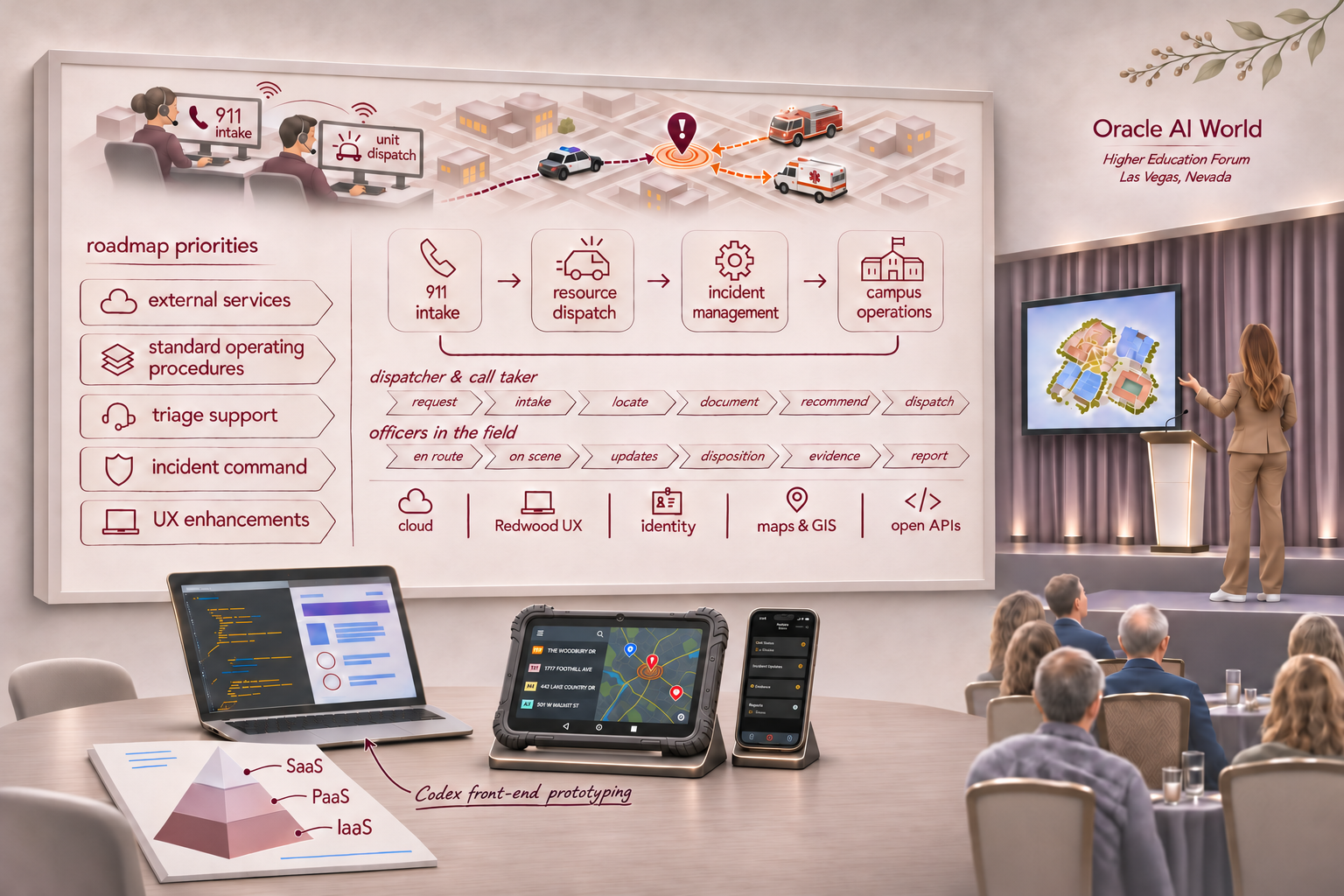
Stepping into a new role in product, I helped shape the evolving vision for the Oracle Command Center, connecting 911 call intake, resource dispatch, and incident management, with public safety, private security, and command center operations. I shared this perspective in a Campus Safety presentation at the Higher Education Forum at Oracle AI World in Las Vegas. Alongside strategic work, I kept my passion for designing and building, moving from Figma to Codex prototypes to contribute to the front-end using Oracle’s Redwood JET framework.
OracleCommand Center
2027 • ecosystem design
2027 marks 15 years since I moved to the US, 10 working as a professional designer, and nearly 5 in the public safety technology space. The seeds I carried from Saudi Arabia have grown into buildings, digital experiences, and mission-critical systems with real world impact. As I keep collecting seeds, I trust intuition and timing to guide when to bring them together and plant the next tree.
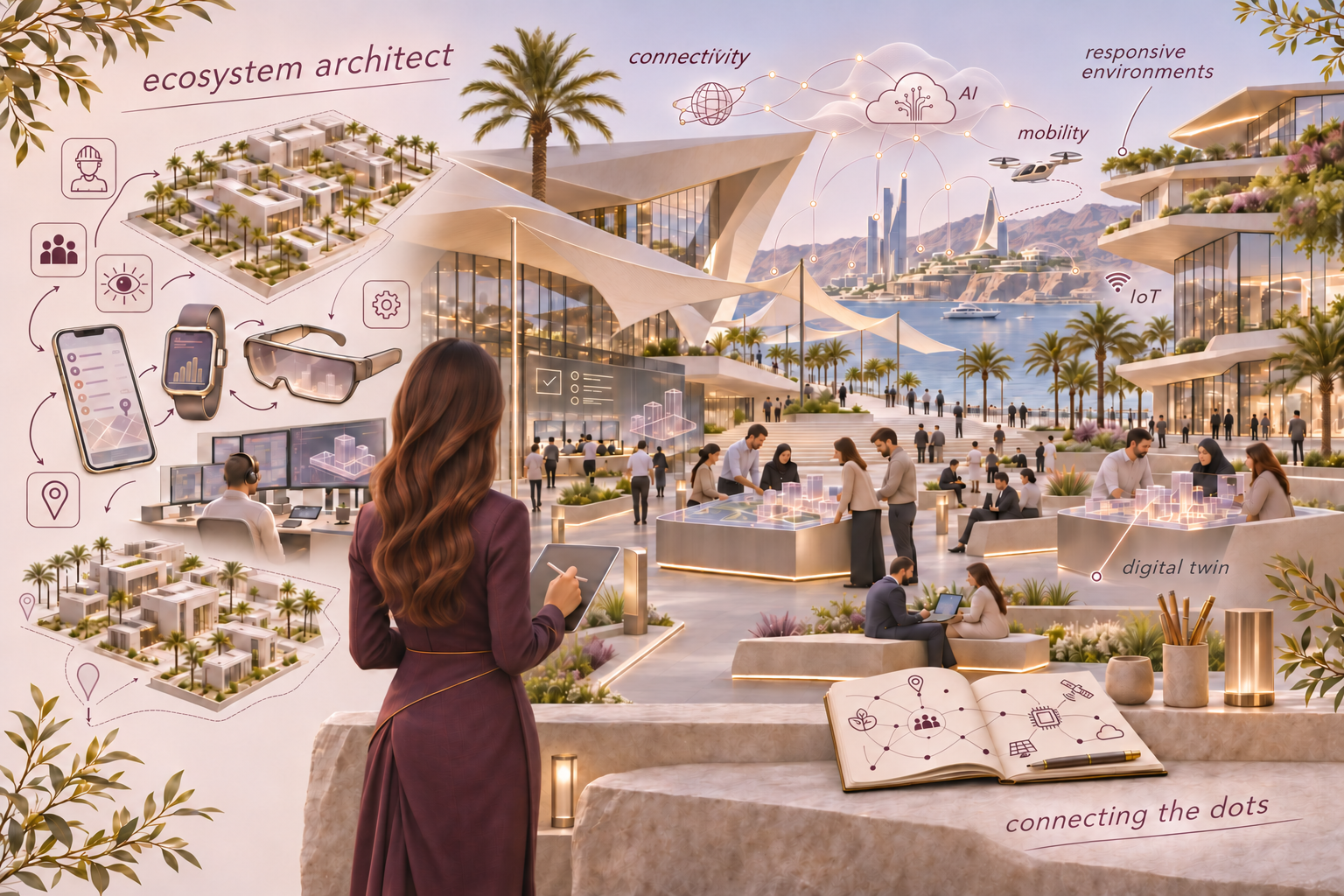
The next seeds I want to cultivate live at the intersection of spatial AI, robotics, and embodied interfaces in order to design context-aware architecture and responsive environments for civic infrastructures that feel calm, yet alive.
what happens when environments become superintelligent and physical surfaces transform into digital interfaces?
r&Dream lab 🌴
The experimental research and development arm of relatableDreamstate was born from a desire to explore the poetry of technology and the emotional possibilities of space through experiments, prototypes, interactive art and immersive storytelling. Designed as an incubator for hands-on prototyping, it is where architecture meets product strategy, and smart cities, public safety, and emerging technology take root together.
It feels like the right time to plant.
From paintbrushes to 3D modeling software, it’s never been about the tools in the toolbox, but the skills and dreams of the artists using them. In the same spirit, it will never be about AI and agents, but rather humans and their creative direction driving them.